Luxury Business
Sylvia L. on Private Aviation, Yachts, and the New Geography of Trust
In this B2BRICS Magazine interview, EliteVanta founder Sylvia L. explains why premium mobility now functions not simply as transport, but as a strategic environment where trust, discretion, and cross-border opportunity are formed.
30.05.2026 by Editorial Team
From the editors
Luxury Business
Published: May 2026 | Format: Written interview
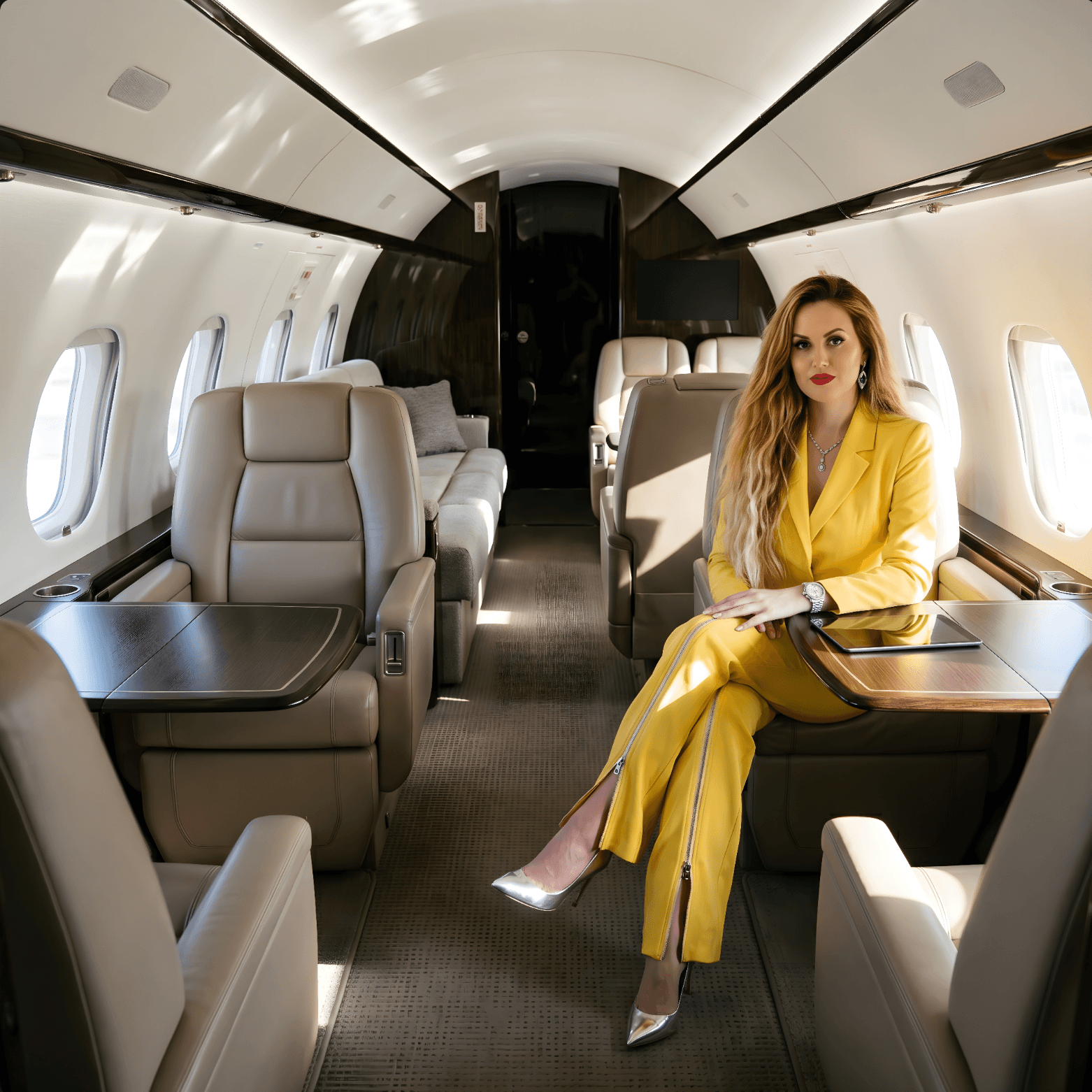
Private aviation and yachting are no longer just premium transport categories. In Sylvia L.’s view, they have become strategic environments where trust, discretion, timing, and cross-border opportunity are formed, especially for globally mobile clients operating across Europe, the Middle East, and wider international markets. What matters now is not visible luxury alone, but whether mobility creates the conditions for stronger judgment, cleaner communication, and more intelligent continuity across borders.
This B2BRICS Magazine interview explains why premium mobility is increasingly defined by orchestration rather than display, why privacy becomes a strategic business asset rather than a comfort feature, and why sophisticated clients now buy clarity, control, and continuity more than excess choice. Sylvia L., Founder & CEO of EliteVanta, describes how invitation-only access, context-aware curation, and frictionless execution are reshaping the premium experience economy in 2026.
For B2BRICS readers, the relevance is practical. The conversation reframes jets, yachts, real estate, and bespoke access not as isolated luxury services, but as an interconnected relationship infrastructure for investors, principals, family offices, and international executives who need to move intelligently through a fragmented global environment.
Why Is Premium Mobility Becoming a Strategic Environment Rather Than Just Transport?
Question 1
You described private aviation and yachts not simply as transport, but as a strategic environment where relationships and opportunities are formed. What does that distinction mean in practice, and why is it becoming more relevant now?
For me, the distinction comes down to what actually happens inside those environments. Private aviation and yachts are often described in terms of privacy, convenience, and efficiency, but those are only the visible layer.
In practice, they remove interruptions, fragmented attention, and constant time pressure. Once those disappear, conversations develop with more depth and less friction. Some of the most meaningful introductions and decisions do not happen in formal meetings on the ground, but during shared travel where there is no rigid agenda and trust can form more naturally. This matters even more now because globally mobile decision-makers are operating across multiple regions and time zones, so travel is no longer separate from business. It has become part of the relationship-building process itself.
Question 2
EliteVanta is built on the principle that luxury is a standard, not a price point. How do you translate that philosophy into the actual experience you design for clients?
For us, luxury as a standard means beginning with the client’s expectation of how the experience should feel, not with the asset itself. Whether the context is private aviation, yachts, real estate, or a rare asset, the focus is on consistency, discretion, and precision across the full journey.
That means removing friction rather than showcasing visible extravagance. A multi-leg family itinerary across Europe and key Middle East hubs, for example, is not treated as separate bookings, but as one continuous experience. Transfer timing, crew coordination, concierge alignment, dietary preferences, and atmosphere are managed as one integrated flow so the client never feels they are assembling the experience themselves. The most important shift is not the visible level of luxury, but the level of orchestration working quietly underneath it.
Question 3
In the premium segment, curation is often more powerful than abundance. Why is careful selection becoming a more meaningful signal of value than excess choice?
Because excess choice often creates friction rather than confidence. At the highest level, clients are rarely constrained by access itself; they are constrained by time, attention, and decision fatigue.
Careful curation signals understanding. It shows that complexity has already been filtered, that irrelevant options have been removed, and that what remains is aligned with the client’s real intent. When sourcing a property, aircraft, or yacht, the most appreciated part of the process is often not the number of options presented, but the quality of the first two or three. In that sense, curation is not limitation. It is precision, and precision has become one of the clearest indicators of premium quality.
“Premium mobility is no longer just transport. It is a strategic environment where relationships, trust, and opportunity are formed.”
How Do Trust, Privacy, and Access Work in High-Level International Environments?
Question 4
In high-level international business, trust is rarely built in boardrooms alone. What is it about private jets, yachts, and highly curated environments that changes the quality of conversation and relationship-building?
Trust develops differently when time, proximity, and attention are shared without interruption. Private jets, yachts, and highly curated environments remove formality, external noise, and performative pressure, which allows more natural dialogue to emerge.
In those settings, people are not only exchanging information. They are also reading intent, values, consistency, and decision-making style. Traditional boardroom meetings tend to compress conversation, while transit and onboard environments allow it to unfold with more continuity. Discussions can move from immediate business matters into broader perspectives on risk, markets, and long-term alignment, and those transitions often reveal far more than structured presentations do.
Question 5
For premium clients, privacy is often treated as a comfort feature. When does privacy become a genuine strategic business asset, and how do you build it into what EliteVanta offers?
Privacy becomes strategic when it improves judgment, timing, and execution. In highly visible environments, people become more guarded, especially when the conversation involves capital allocation, cross-border moves, or sensitive partnerships.
In private settings, the quality of conversation changes. It becomes less performative and more direct, which often leads to faster clarity. Privacy also protects timing, because information can carry value long before any formal transaction or announcement. At EliteVanta, that is embedded operationally through how access is structured, how partners are coordinated, and how information moves across each stage of a journey. Privacy is not an add-on. It is part of the framework that allows high-trust decisions to happen efficiently.
Question 6
EliteVanta operates on an invitation-only model. What does true access mean in the premium segment today, and how do you distinguish meaningful access from performative exclusivity?
True access is about relevance, not spectacle. In the premium segment, it is easy to confuse exclusivity with value, but performative exclusivity is often just signalling, while meaningful access is defined by whether the right people, resources, or opportunities are aligned with a client’s intent and timing.
Being invited into a room or network is not the goal in itself. What matters is whether that environment creates informed decisions, credible introductions, or opportunities unavailable through standard channels. Our invitation-only model is not designed to create artificial scarcity. It exists to protect relevance, context, and trust across aviation, yachts, real estate, and private networks.
“Privacy becomes strategic when it improves judgment, timing, and execution.”

How Is the Global Premium Client Changing Across Markets?
Question 7
How has the mindset of the globally mobile ultra-high-net-worth client changed in recent years? What do sophisticated clients expect today beyond luxury itself?
The mindset has shifted from access to luxury toward control of time, information, and outcomes. Today’s globally mobile clients are far more operational in how they think about mobility, access, and premium service.
They are not looking for more options or more visibility. They want intelligent speed, meaning arrangements that are already filtered, aligned, and context-aware before they reach them. Curation has become central because it reduces cognitive load and makes the right path obvious. Privacy and security are expected as baseline infrastructure, while flexibility matters because plans increasingly shift across markets and time zones. In practical terms, clients are now buying clarity, control, and continuity more than luxury as display.
Question 8
From your vantage point across private aviation, yachts, real estate, and bespoke experiences, what cross-border patterns are you observing among internationally mobile clients?
The clearest shift is that clients are no longer thinking in isolated geographies. They are thinking in corridors of movement and opportunity that connect Europe, the Middle East, and selected emerging markets in a more fluid way.
We are seeing multi-region lifestyles becoming structural rather than occasional, with presence adjusted continuously around business cycles, investments, and family priorities. Efficiency of movement now matters as much as the destination, which affects everything from aircraft selection to the role of properties in a portfolio. Value is also being redefined. It is less about ownership for its own sake and more about access to ecosystems of trusted operators, curated networks, and integrated services that work smoothly across borders.
Question 9
How do private aviation and yachting environments influence the pace, tone, and depth of international conversations when trust, confidentiality, and long-term alignment are at stake?
They influence conversations through structure of time and attention more than through visible luxury. When people share a controlled and uninterrupted space, the pace slows naturally, but the depth increases.
There is no constant reset between meetings, no external interruption, and no need to compress complexity into short formal windows. That changes tone as well. Communication becomes less positional and more contextual, allowing people to test ideas, surface risks earlier, and speak more openly about constraints. Long-term alignment often forms not in a single negotiation moment, but through the accumulation of high-quality informal interactions that would not exist in standard meeting structures.
“Global premium clients now buy clarity, control, and continuity more than excess choice.”
What Kind of Leadership and Judgment Will Define the Next Premium Operators?
Question 10
What kind of judgment, sensitivity, and emotional intelligence are required to work at the highest level with ultra-high-net-worth clients?
Working at that level requires judgment that is based as much on what is understood as on what is explicitly said. The essential skill is reading context quickly and accurately: timing, hierarchy, culture, silence, and the small details that often reveal unstated priorities.
Emotional intelligence matters in a restrained rather than performative form. Clients value professionals who can stay steady, anticipate needs without overstepping, and adapt without making the adjustment visible. Reliability comes from decision quality under ambiguity, which means filtering what matters, escalating what is truly important, and quietly removing friction before it reaches the client.
Question 11
Premium mobility and access increasingly operate across countries and cultural codes. What have you learned about discretion, etiquette, and trust-building in a truly international environment?
In a truly international environment, discretion and etiquette are not fixed formulas. They are situational codes that shift with geography, hierarchy, and decision-making culture.
Discretion is often less about silence than about controlling exposure: who is included, when they are included, and how timing is managed. Etiquette is not simply formal behaviour, but the ability to read structure quickly and communicate without misalignment. Trust is the more universal principle. Across regions, clients respond to repeated execution under real conditions, especially when coordination becomes complex across borders and time zones.
Question 12
The luxury, mobility, investment, and asset-driven world has traditionally been male-dominated in many markets. How do you see the role of women evolving in premium leadership today?
Women are becoming more visible and influential in premium leadership not by copying older structures, but by broadening what counts as strategic value. In many cases, women bring a more holistic view of relationships, orchestration, nuance, and context, all of which are highly relevant in environments where trust and detail matter more than visible scale.
That perspective is still undervalued in some markets. Yet in cross-border premium environments, long-term alignment, ecosystem thinking, and sensitivity to human and cultural signals are often what determine whether a relationship becomes durable. As more women move into senior roles, they are helping redefine leadership in the premium world around precision, intuition, and relational intelligence rather than around signal alone.
Question 13
Looking ahead three to five years, how do you expect private aviation, yachting, and bespoke access to evolve?
Over the next three to five years, these sectors will evolve from asset-led categories into seamless ecosystems. Clients will increasingly value providers who can connect travel, lifestyle, access, and investment opportunities in one coordinated flow rather than offering isolated premium objects.
Serious market participants should already be watching regional integration, digital intelligence in planning and operations, and the growth of multi-leg, multi-asset itineraries that demand higher precision. Sustainability, regulatory alignment, and geopolitical complexity will also shape decisions more directly. The operators that lead will be those combining predictive design, cross-border agility, and operational trust at scale.
Question 14
For founders, investors, family offices, and executives who operate internationally, what is the single most important thing to understand about premium mobility today?
The single most important point is that premium mobility is now part of strategic decision-making, not just a convenience layer around it. How people move, who they meet, and the environments in which those interactions occur increasingly shape both perception and outcome.
That means every charter, journey, and access point should be treated as part of a broader strategic ecosystem. The most effective operators understand mobility as both an enabler and an amplifier of influence. They are not only moving people efficiently. They are creating the conditions in which trust, alignment, and opportunity can emerge naturally across borders.
Quick Insights
Question 15
What are the clearest signals shaping modern luxury and the global UHNW environment?
Three words define modern luxury today: seamlessness, discretion, and precision. The quality I value most in long-term client relationships is trust, because trust creates the basis for collaboration, privacy, and meaningful opportunities over time.
One persistent misconception about private aviation and yachting is that they are purely about status, when in reality they are often strategic environments for efficient relationship-building and business judgment. One emerging shift worth watching closely is the growing demand for experiences that unite travel, lifestyle, and investment with higher levels of orchestration and discretion. A book that shaped my approach is Peter Drucker’s The Effective Executive, particularly its emphasis on clarity, focus, and aligning action with meaningful outcomes.
Expert
Sylvia L. is the Founder & CEO of EliteVanta, a private, invitation-only platform connecting ultra-high-net-worth individuals, investors, and principals to private aviation, yachts, luxury real estate, rare assets, art, and bespoke experiences. Her work is centered on discretion, precision, and context-aware curation across global markets.
EliteVanta does not position itself as a broker or listing agent. Instead, it structures introductions, controls access, and orchestrates multi-layered environments where trust, relationships, and cross-border opportunities can form naturally. Through an international network of aviation operators, yacht owners, real estate advisors, art professionals, and private principals, the platform emphasizes strategic orchestration over visible excess.
Its philosophy is direct: luxury is a standard, not a price point. In practice, that means operational excellence, intelligent continuity, and thoughtful attention to detail across every market it serves.

Key Points
Q: Why are private aviation and yachts becoming strategic business environments rather than just transport?
Because they create controlled, uninterrupted spaces where people can speak with greater depth, continuity, and trust. In those settings, conversations are less compressed, less performative, and often more revealing than in formal meetings. For internationally mobile principals and executives, travel is increasingly part of the relationship-building process rather than something separate from it.
Q: What does Sylvia L. mean when she says luxury is a standard, not a price point?
She means that premium value comes from consistency, discretion, and orchestration rather than from visible excess alone. A true luxury experience is defined by how seamlessly everything is aligned across touchpoints, how little friction the client experiences, and how naturally complex logistics feel integrated into one continuous journey.
Q: When does privacy become a strategic asset for premium clients?
Privacy becomes strategic when it improves the quality of judgment and protects timing. In sensitive cross-border environments, the ability to explore decisions without noise, exposure, or unnecessary attention creates more direct conversations and often better outcomes. At that point, privacy is no longer a comfort feature. It becomes part of the operational framework for decision-making.
Q: How has the globally mobile premium client changed in recent years?
The globally mobile premium client now thinks less in terms of visible luxury and more in terms of control over time, information, and continuity. Sophisticated clients want intelligent speed, fewer but better options, and trusted ecosystems that work across regions. Their priority is not abundance. It is relevance, accuracy, and frictionless execution.
Q: What does meaningful access look like in the premium segment today?
Meaningful access is not simply entry into a visible room or exclusive network. It is access that is relevant to the client’s intent, timing, and long-term objectives. In other words, it is measured by outcomes: the quality of introductions, the credibility of the environment, and whether the access creates decisions or opportunities that would not otherwise have existed.
Q: What should serious market participants watch in premium mobility over the next three to five years?
They should watch the shift from asset-based offerings to integrated ecosystems that combine mobility, lifestyle, access, and investment in one coordinated flow. Cross-border agility, predictive design, regulatory navigation, sustainability awareness, and digital intelligence in planning will all become more important. The market is likely to reward operators who make complex movement feel simple while protecting discretion and trust.
Privacy Policy