Luxury Business
Francesco Iannuzzi on Design Authorship, Italian Craftsmanship, and the Future of Bespoke Mobility
Francesco Iannuzzi explains why the future of bespoke mobility depends on authorship, coherence, emotional design, and the disciplined fusion of craft with digital development.
12.07.2026 by Editorial Team
From the editors
Luxury Business
Premium mobility is moving away from superficial customization and toward authorship, coherence, and emotionally intelligent design, and that is the central argument of this conversation with Francesco Iannuzzi, Founder & Creative Director of DOTTO Creations.
For B2BRICS Magazine readers, this interview explains how a contemporary Italian atelier approaches one-off pieces, limited series, digital development, artisanal execution, and the changing meaning of luxury in a globally connected market.
From the editor-in-chief perspective, the value of this discussion lies in its clarity: Iannuzzi is not describing styling upgrades or decorative exclusivity, but a disciplined design philosophy in which proportion, intention, material, function, and cultural relevance must speak the same language.
What Is DOTTO Creations Trying to Build?
Question 1
For readers discovering you for the first time, what personal path led you toward design, and what eventually made you decide to found DOTTO Creations?
My path into design began with curiosity, long before I had professional language for it.
As a child, I took objects apart to understand how they worked, and later I understood that people do not choose objects only because they function mechanically, but because they function emotionally as well.
Vehicles express this especially clearly, because they move people physically but are also chosen, remembered, loved, and collected for the emotional charge they carry.
My professional experience then exposed me to different schools of thought, from the pragmatic intelligence of Italdesign and Giorgetto Giugiaro to the more emotional intensity of Pininfarina and, later, the inside perspective of a Chinese OEM through Changan.
DOTTO Creations ultimately came from frustration with large structures that had become too cautious, too crowded, and too fearful of mistakes, and from the desire to build an atelier that could still look at the world with the eyes of a child and test ideas larger organizations often consider too risky.
Question 2
How would you describe the original idea behind DOTTO Creations in its purest form?
The original idea behind DOTTO was freedom with responsibility.
I did not see a lack of customization in the market, because customization already exists in abundance, but I did see a lack of true ground-up thinking.
Many projects add color, trim, graphics, or finish to an existing product, but DOTTO was created to build coherent objects in which proportion, material, story, usability, and execution all express one complete thought.
That is why we begin with basic questions about why an object should exist, who defined the point of view from which it is usually seen, and whether another perspective might reveal something more essential rather than merely more novel.
Synthesis matters to us because the goal is not decoration, but desire with substance and objects that feel inevitable rather than dressed up.
Question 3
When people encounter DOTTO Creations for the first time, what do you most hope they understand about your philosophy of design and craftsmanship?
I hope they understand that craftsmanship is not nostalgia and design is not styling.
For us, craftsmanship means taking responsibility for every decision in the object, from a surface transition to the way a component is made, while design gives those decisions direction and meaning.
A DOTTO creation should first provoke an emotional reaction, ideally the feeling that something has been done in a way the viewer did not think was possible.
After that first impact, however, the object still has to hold together through proportion, logic, quality, and integrity, because rarity alone does not make something meaningful.
“Craftsmanship is not nostalgia and design is not styling.”
How Does DOTTO Turn One-Off Ideas Into Real Objects?
Question 4
DOTTO Creations presents itself through ideas such as design, handcraft, tailormade work, one-off pieces, and limited series. How do these principles translate into your actual creative and production process?
At DOTTO, the process itself is one-off even before the object becomes one-off.
If a client wants a unique piece, we build a more flexible and artisanal process around that requirement, while a small series demands more repeatability so cost, quality, and identity can be managed together.
What we bring from automotive design is knowledge from both worlds: how industrial products are developed at scale and how prototypes and one-off vehicles are built outside normal production logic.
One of the most important challenges for the studio is to combine the exclusivity of the artisanal world with some of the efficiency and discipline of the industrial one.
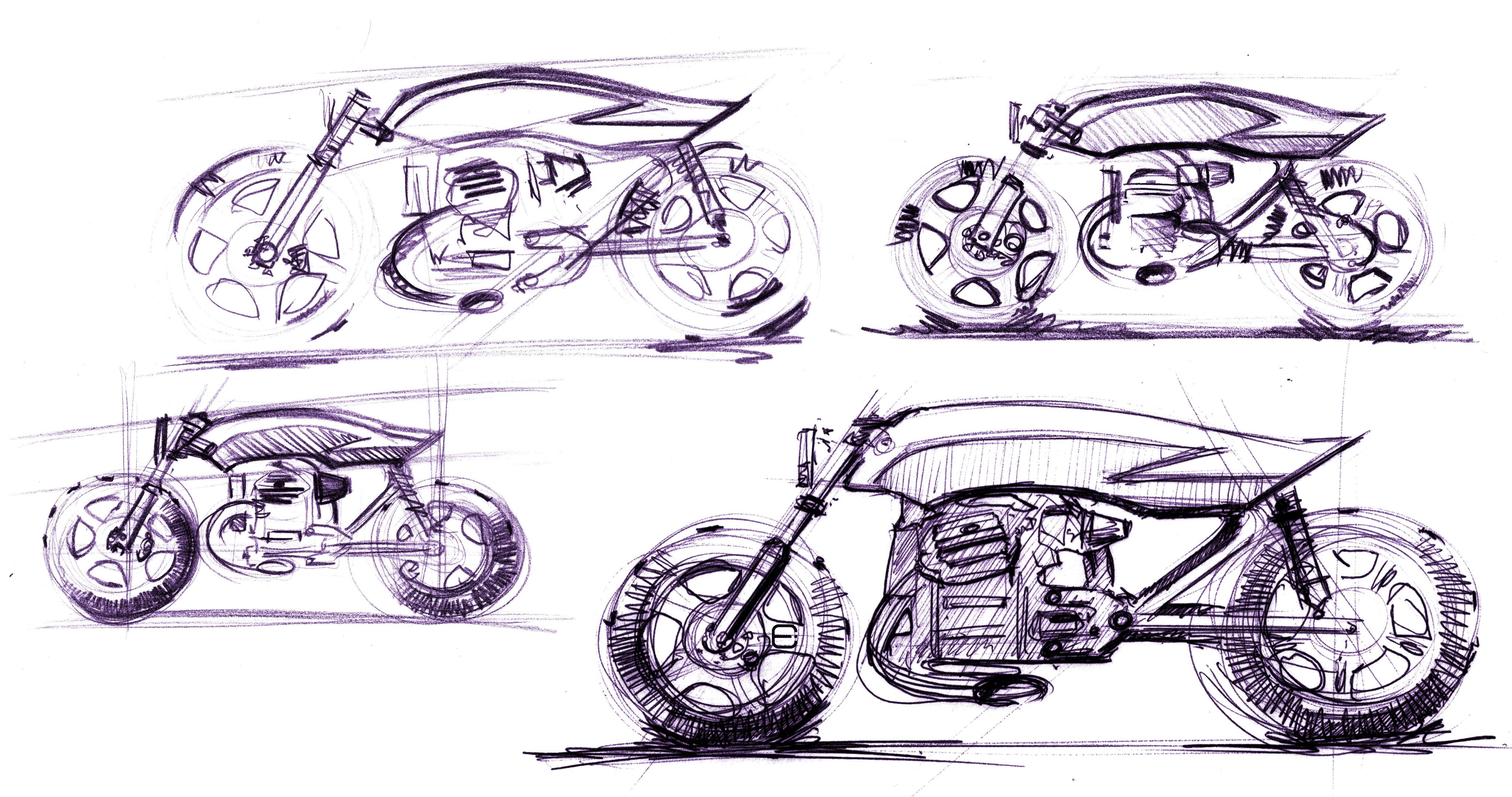
A key principle is to digitalize failure by making mistakes early in sketches, CAD, visualization, VR, 3D scans, rapid prototyping, CMF research, and digital simulation before matter becomes expensive.
CAD enters early, VR helps verify aesthetics and proportions directly, and the same immersive tools can also bring the client into the development process in a natural way.
The artisanal phase is not separate from design, because materials, tolerances, surfaces, assembly, ergonomics, and finishing all shape the final result as part of one statement.
Question 5
In a market where many brands speak about exclusivity, what, in your view, truly separates authentic bespoke creation from luxury styling or superficial customization?
Authentic bespoke creation begins with concept rather than with ornament.
We do not offer a catalogue to choose from, because the real process starts by speaking with clients and building a menu from ingredients studied around them rather than from predetermined options.
Superficial customization usually works by addition, through color, finish, badges, or material upgrades, but bespoke work asks why an object should be different, what experience it should create, and how every design decision supports that intention.
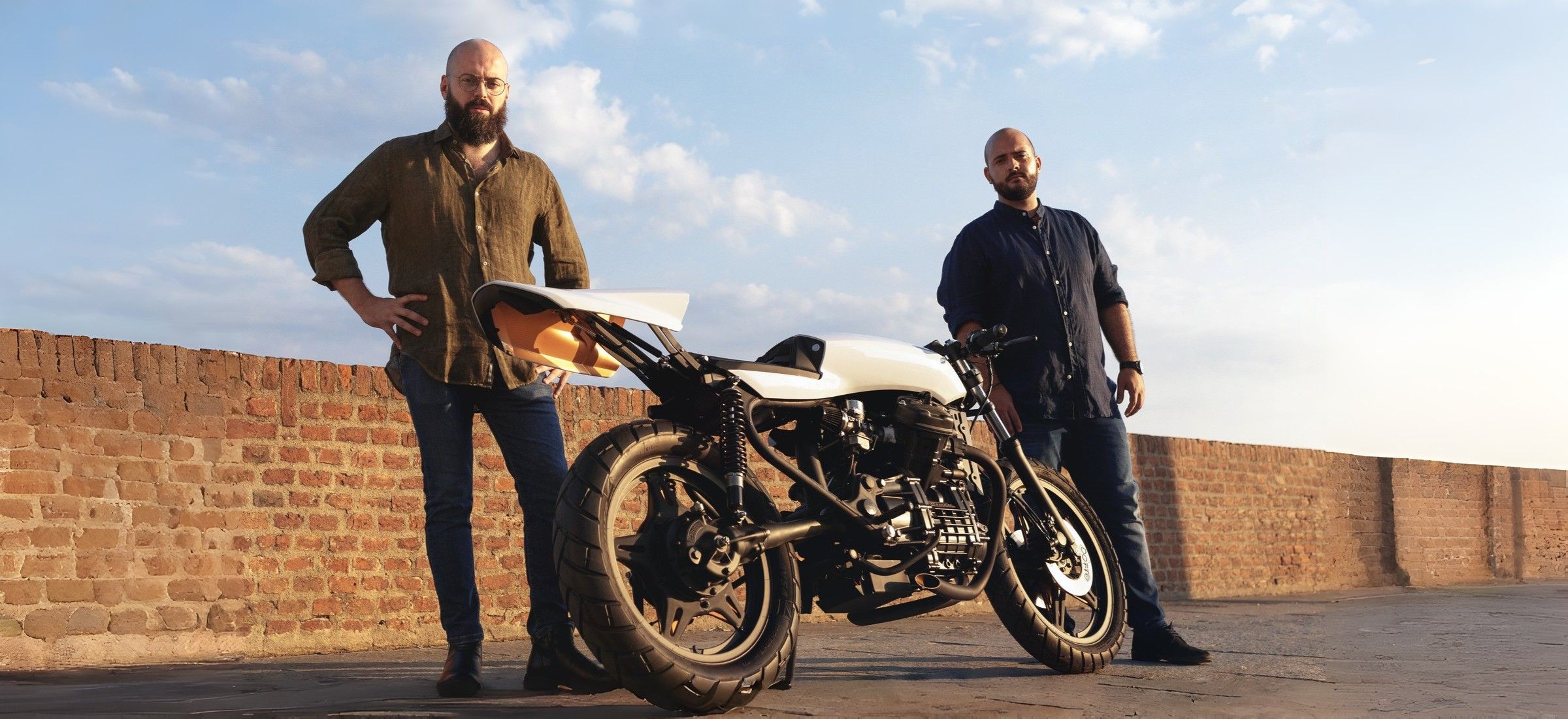
The Handyman project with Danilo Petrucci is a clear example, because it began from his blunt question about why enduro motorcycles, despite their broad capability, often have to look like “uncle bikes.”
Our answer was to integrate function into the line itself through a flowing monoform, integrated fork protectors, and a riding posture that could shift between upright use and a more tucked, almost MotoGP-like position.
Internally, the standard is simple: if rarity, price, and spectacle disappear, the object must still retain a clear design reason to exist, along with charisma, coherence, and a recognizable DOTTO identity even without a logo.
We chose to work in small series because they allow us to preserve artisanal exclusivity while gaining some of the economy and agility of industrial logic.
Question 6
How do you personally balance aesthetic ambition with engineering credibility, usability, and long-term brand coherence?
At the beginning of a project, I try not to balance these things at all.
Balance can become another word for premature compromise, so we prefer to begin from the idea in its purest form and delay compromise for as long as possible.
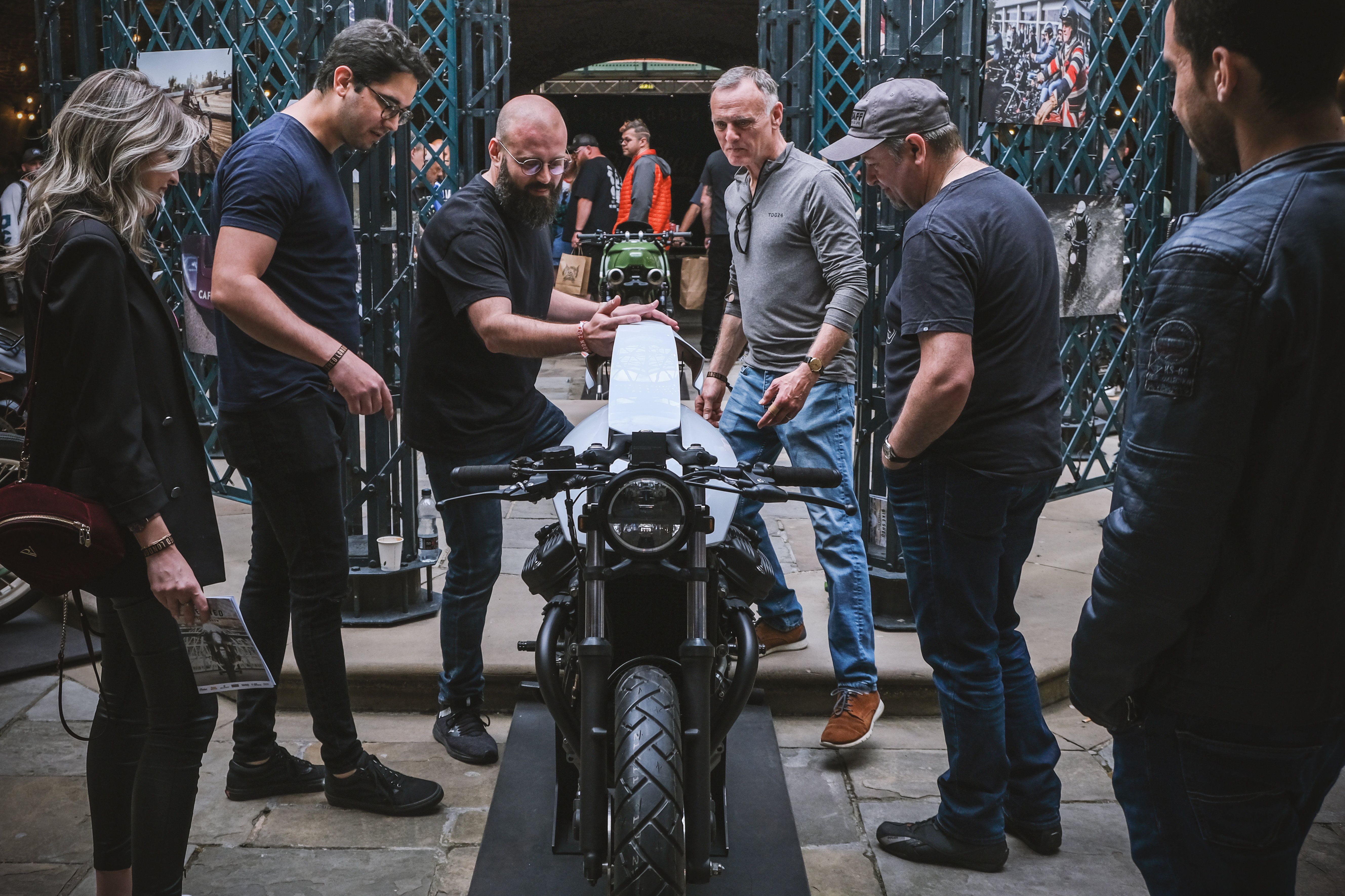
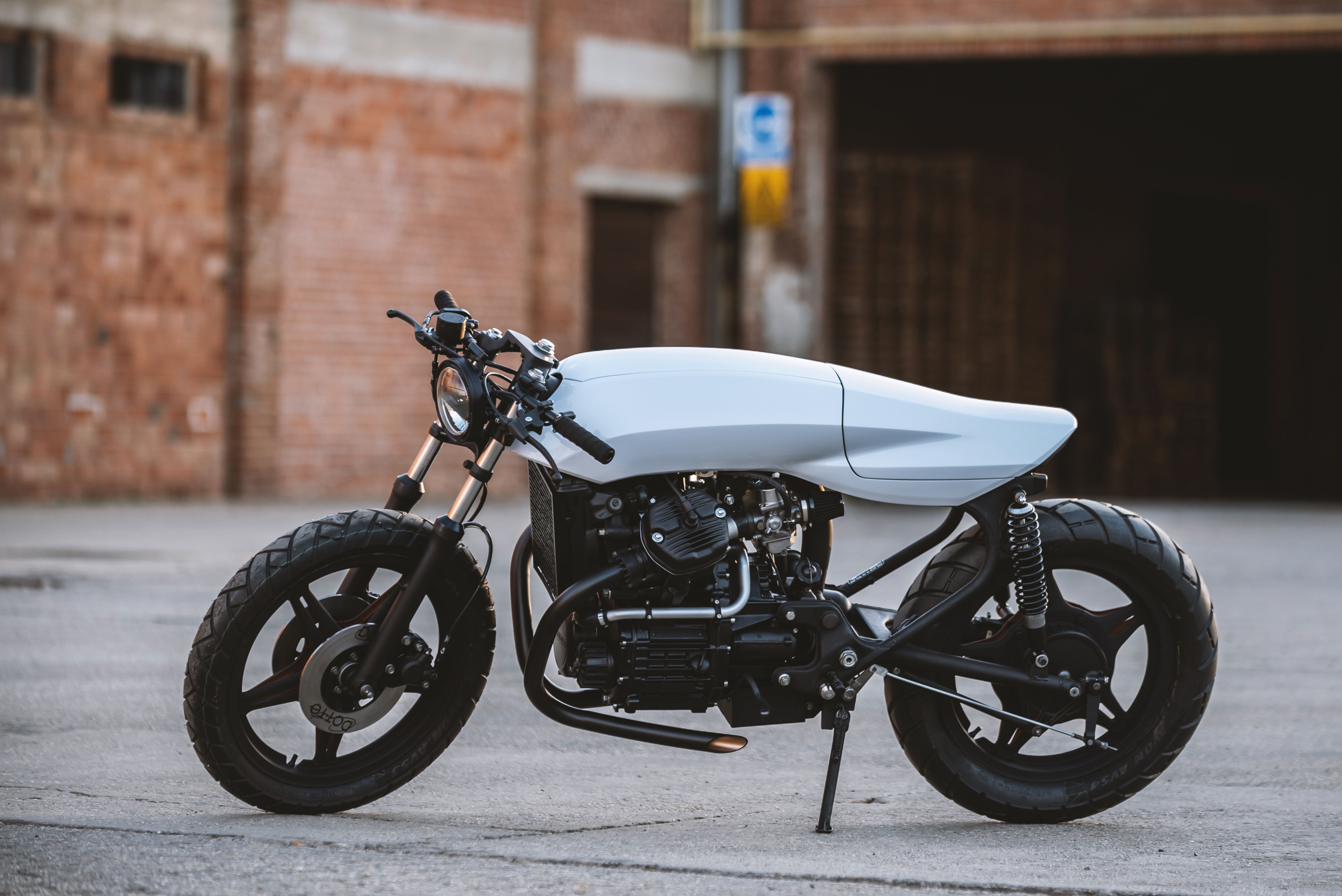
Biancaneve expresses this well, because it began as a sculpture that could be ridden rather than as an attempt to satisfy conventional motorcycle codes from the start.
Only later did technical and engineering capability enter to make that pure form rideable and credible.
Experience is valuable, but it can also reduce freedom if it reassures you too quickly, which is why we try to remain almost childlike at the beginning and let discipline arrive later without suffocating the first idea.
“In a sense, we are digital sculptors.”
Who Is the Market for Design-Led Mobility in 2026?
Question 7
Who is the ideal DOTTO Creations client today, and what kind of mindset or sensibility do you find most aligned with your work?
The ideal DOTTO client is defined more by sensibility than by wealth or geography.
Our work naturally speaks to collectors, entrepreneurs, riders, and people who already understand this world, but the right client is ultimately someone who wants to build a dream rather than merely chase status.
That kind of client is interested in the story of the object, the choices behind it, and the fact that it carries a specific point of view instead of acting as a generic symbol of success.
Many such clients are internationally minded and may live in Europe, the Gulf, Asia, or the United States, but they share an instinctive appreciation for Italian design as a way of shaping emotion through proportion, material, craft, and restraint.
We do not need to persuade everyone, because a DOTTO creation is meant for a small number of visionaries for whom ownership is also a statement of taste.
Question 8
How do you see international demand evolving for highly distinctive, design-led mobility objects and limited-series creations?
International demand is moving toward stronger identity and stronger authorship.
Exclusive cars, restomods, and one-off creations are often treated as financial objects, sometimes more for speculation than for experience, but a parallel demand is growing for objects that carry a clearer design intelligence and a more meaningful narrative.
In luxury markets, abundance has made rarity more important, but rarity now has to mean more than limited quantity.
A limited series becomes compelling only when it carries story, culture, and recognizable authorship rather than numerical scarcity alone.
Europe remains important because of heritage, craft, and design credibility, the Gulf shows strong appetite for distinctive commissions, Asia is becoming increasingly sophisticated in design culture, and the United States continues to value exaggeration and individuality in its own way.
Across all these markets, mobility is moving closer to the broader collecting world of art, watches, architecture, and fashion.
Question 9
Projects such as Noveunosei suggest a strong interest in reinterpretation, heritage, and contemporary performance language. What do these kinds of projects allow you to express that a conventional commercial product cannot?
Projects like Noveunosei allow us to show that the same design method can lead to radically different formal outcomes and that formal complexity is not the only valid path for contemporary motorcycles.
Our first DOTTO creations were intentionally different from one another because we needed to show the world our intentions without allowing one project to narrow the idea of what the studio could be.
Noveunosei began from the thought that many motorcycles have become increasingly complex and transformer-like, full of details, aerodynamic wings, and aggressive faces, even though the motorcycle as an object remains emotionally far more important than it is practically useful.
The project used the anniversary of the 916 as a shared reference point, but not to produce nostalgia or a replica.
Instead, it used formal memories from the past to question contemporary conventions, including turning the headlight area into the air intake, rethinking triangular intakes as air passages over the rider’s thighs, and using the tail lights as a pretext to create voids.
For me, heritage means distilling an earlier approach and asking whether the contemporary version is truly better, and our freedom comes from not having to satisfy thousands of buyers or defend an industrial sales language.
“True exclusivity is not only about how few pieces exist. It is about how difficult the object would be to replace conceptually.”
What Will Define the Next Era of Luxury Mobility?
Question 10
As a founder and creative director, what kind of leadership is required to protect originality while also building a business that can endure?
Leadership starts with clarity.
Originality becomes dangerous when direction is vague, so the founder has to protect the central idea of the studio while also making the business real through clients, suppliers, schedules, costs, homologation, production constraints, communication, and long-term reputation.
This requires discipline, a constant effort to improve the signal-to-noise ratio, patience when meaningful ideas are not immediately legible, and strong partners across the chain.
It also requires the ability to say no when an opportunity might weaken coherence or dilute the brand.
The culture must make people care about details because even hidden components can carry the spirit of the project, and if DOTTO loses coherence it becomes just another customization brand.
Question 11
What major shifts do you believe serious observers of the automotive and luxury mobility sectors should be watching more closely over the next few years?
One major shift is the changing meaning of ownership.
At the high end, the question is increasingly not only what a vehicle does, but what it says about taste, values, and the owner’s relationship with culture.
Technology has flattened many functional differences, which means comfort, power, acceleration, assistance systems, and infotainment no longer guarantee meaningful distinction by themselves.
In that context, true luxury may increasingly become the ability to realize dreams quickly, precisely, and with authorship, because time itself is becoming a luxury.
AI and digital tools will accelerate processes and improve outputs, but I do not yet see AI producing real lateral thinking on its own, which means the advantage will belong to teams and brands that use these tools to make better decisions rather than merely faster images.
Electrification is another open field, because electric performance can already be extraordinary while the emotional codes of electric mobility are still being written.
Sound, smell, and vibration remain central to the emotional memory of internal combustion, and equivalent emotional codes for electric vehicles have not yet fully emerged.
Question 12
Looking ahead, what would you like DOTTO Creations to become in the eyes of the world?
I would like DOTTO Creations to be recognized as a small Italian atelier with a very clear voice.
I hope that voice stays outside the chorus, discussed by some, criticized by others, and never completely neutral, not because we want noise for its own sake, but because a genuinely different approach will naturally provoke a reaction.
We want to create objects that are culturally relevant rather than merely visually attractive, and I already know that Biancaneve has entered the imagination of other designers and studios through mood boards.
Over time, I would like a DOTTO creation to feel impossible to confuse with a normal industrial process, not because it is excessive, but because it carries a particular intensity and a recognizable point of view.
Growth matters only if it sharpens identity, and the real legacy would be to create objects that people remember, discuss, ride, collect, and use as reference points when thinking about contemporary design and the future of bespoke mobility.
The name DOTTO itself points to that worldview, because it comes from the Italian name of Doc from Snow White, while Biancaneve, Snow White, was also the name of the studio’s first creation.
We chose the language of fairy tales in a world of aggressive names and provocative imagery because we want to look at the world like a child, with clarity and lightness rather than with heavy commercial superstructures.
“Time itself is becoming a luxury.”
Key Points
Q: What makes DOTTO Creations different from ordinary luxury customization?
DOTTO differs from ordinary luxury customization because it starts with concept, authorship, and the reason an object should exist, not with decorative upgrades.
Francesco Iannuzzi draws a clear line between bespoke creation and surface-level luxury styling by arguing that a meaningful object must retain coherence, proportion, and design logic even if price, rarity, and spectacle are removed.
Q: How does DOTTO combine craft with modern digital development?
DOTTO combines craft with digital development by using sketches, CAD, VR, 3D scans, rapid prototyping, and simulation to solve problems before physical production becomes expensive.
Iannuzzi describes this as “digitalizing failure,” and the point is not to replace craftsmanship but to strengthen it by making the artisanal phase more intentional, precise, and integrated with design from the earliest stages.
Q: Who is the ideal client for a DOTTO creation?
The ideal client is not simply wealthy, but culturally sensitive and genuinely interested in building a dream.
According to Iannuzzi, the right client cares about the story of the object, the point of view behind it, and the specificity of the design language, which is why DOTTO’s natural audience includes collectors, entrepreneurs, riders, and internationally minded buyers across Europe, the Gulf, Asia, and the United States.
Q: Why is limited-series mobility becoming more relevant in 2026?
Limited-series mobility is becoming more relevant in 2026 because abundance has made generic luxury less meaningful and pushed high-end clients toward stronger identity and authorship.
In Iannuzzi’s view, rarity matters only when it carries story, culture, and recognizable design intelligence, which is why design-led mobility is moving closer to the broader collector universe of art, watches, architecture, and fashion.
Q: What should serious observers watch next in luxury mobility?
Serious observers should watch the changing meaning of ownership, the search for new emotional codes in electric mobility, and the role AI will play in accelerating execution without replacing judgment.
Iannuzzi also suggests that future luxury will be defined less by incremental functional superiority and more by authorship, speed of realization, and the capacity to turn a dream into a culturally resonant object with unusual precision.