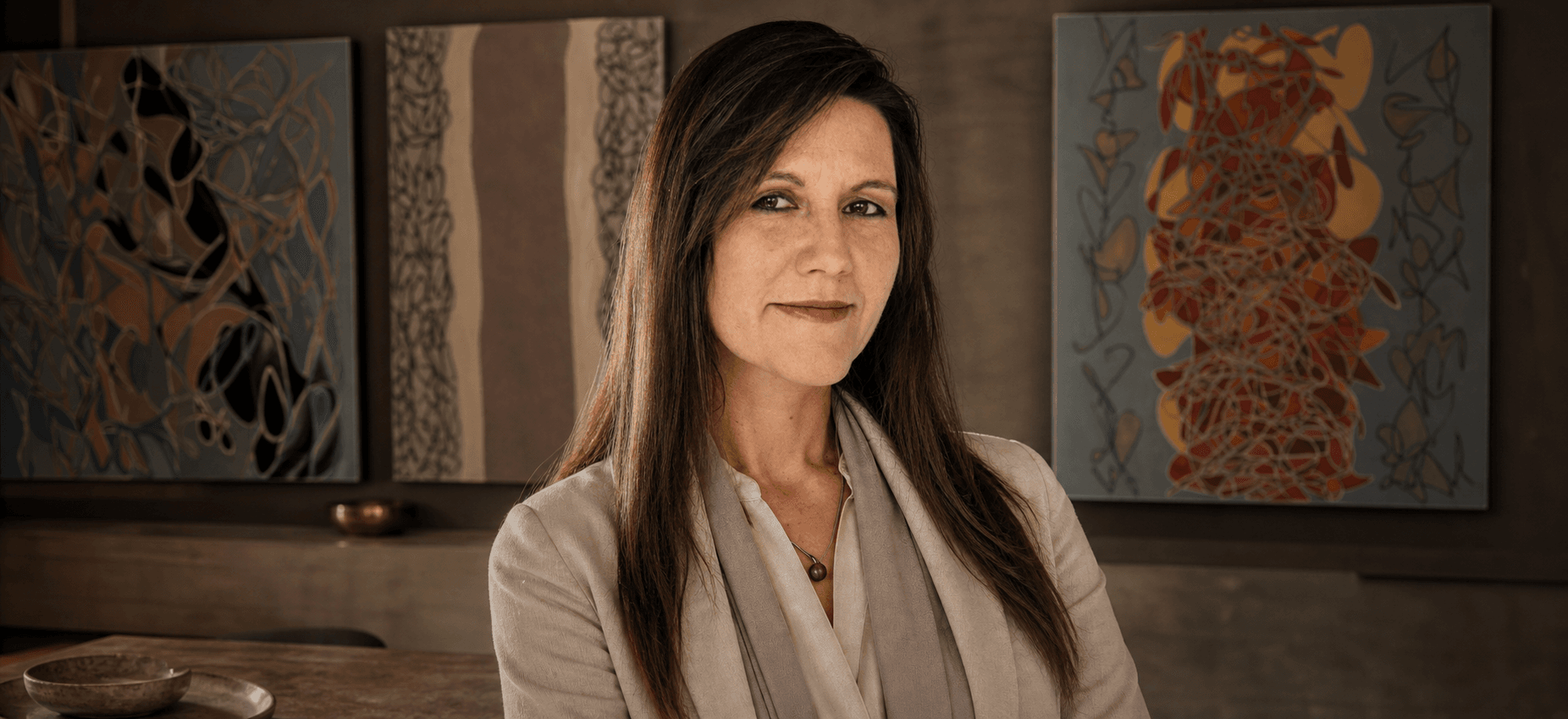
Global Leaders on BRICS
Dimitrios Triadafillidis on Trust-Led Competitiveness, Strategic Clarity, and Better, Not Bigger Growth
Dimitrios Triadafillidis explains why trust, clarity, refusal, and selective growth matter more than noise, scale, and performative visibility for leaders, brands, and destinations in 2026.
29.06.2026 by Editorial Team

From the editors
Global Leaders on BRICS
Better, Not Bigger: How Leaders and Destinations Build Trust-Led Competitiveness in an Age of Noise
In 2026, one of the defining questions for leaders, family businesses, luxury operators, and destinations is whether competitiveness will be built through louder visibility or through sharper judgment. In this conversation, Dimitrios Triadafillidis makes the case for a more durable model: clarity over noise, trust over performance, and selective growth over expansion for its own sake.
For B2BRICS readers across Europe, BRICS, and emerging markets, that argument matters because scale, international exposure, and public attention now often move faster than institutional discipline. What follows is not a marketing conversation, but a serious executive discussion about reputation, positioning, succession, destination value creation, and the strategic cost of growing without coherence.
From the Editor-in-Chief of B2BRICS Magazine: this interview reflects the editorial standard we believe matters most for a global interview platform operating at the intersection of BRICS markets and the world economy. It is a conversation for founders, CEOs, investors, family offices, destination strategists, and cross-border decision-makers who understand that long-term competitiveness is built not only by expansion, but by the discipline to remain worth choosing.
Editorial note: The questions below are presented in the original interview structure prepared for B2BRICS Magazine. The answers are presented in the speaker's submitted wording, formatted for publication.
What Shapes Strategic Clarity and Trust in Leadership?
Question 1
You have spent decades advising leaders, brands, and destinations across Europe. Looking back, which experiences most shaped your conviction that clarity and trust matter more than noise and expansion?
Three things, really, and none of them happened in a boardroom. Early on, I watched a family-run island hotel — beautiful, full of soul, the kind of place people remembered for years — slowly talk itself into mediocrity. Every season they chased a few more beds, a slightly lower rate, a louder promotion. Within a decade it was full and forgettable. The owner couldn't understand why a hotel at ninety percent occupancy was bleeding money and bleeding meaning. That stayed with me.
The second was watching the opposite: a small operator who refused to discount and refused to expand, and who quietly became the most trusted name in his market. The third is simpler. I'm old enough now to have seen the loud ones disappear and the clear ones endure. Noise has a short shelf life. Trust compounds. Once you've watched that play out a few hundred times across forty-five years, you stop confusing being seen with being chosen.
“Noise has a short shelf life. Trust compounds.”
Question 2
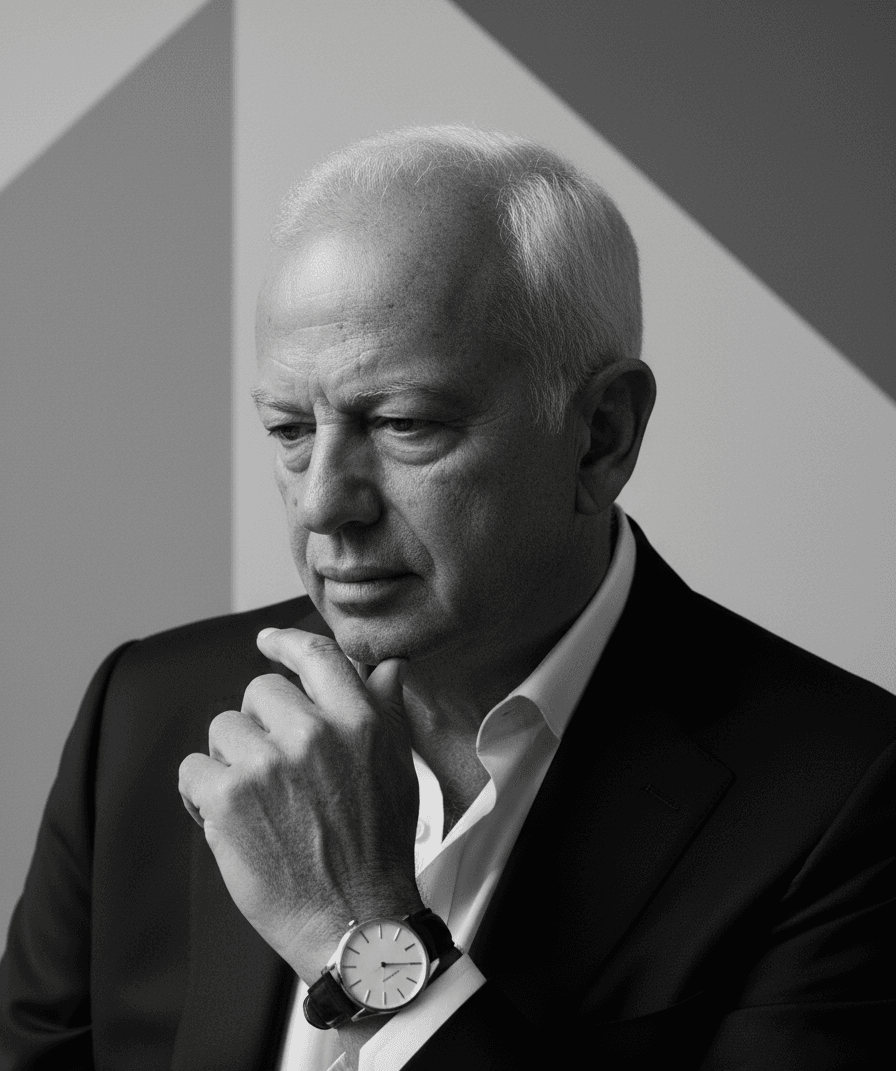
Melior Tempus presents a distinctive point of view: better is better. How did that philosophy emerge, and what did you see in the market that convinced you a different advisory model was needed?
It came from frustration, honestly. I'd spent years inside an industry that treats growth like a religion — more rooms, more reach, more noise — and a consulting culture that profits from selling the cure for problems it helped create. Everyone was optimising. Nobody was choosing. I kept meeting owners who'd been told to scale, to be everywhere, to chase every segment, and who'd ended up bigger, busier, and weaker.
Bigger is easy to sell. It photographs well. It flatters the ego. But better is harder and quieter — it asks you to decide who you are not for. Melior Tempus — “a better time” — came out of that. I wasn't reacting against ambition. I was reacting against the lie that ambition and volume are the same thing. The strongest businesses I've known grew narrower and deeper, not wider and thinner. So the model is simple: don't grow bigger, grow stronger. Most people nod at that and then go and do the opposite, because stronger doesn't trend.
Question 3
You often work at moments of reinvention, uncertainty, or reputational pressure. In your experience, what usually goes wrong before leaders realize they need strategic clarity?
They mistake activity for direction. The pattern is almost always the same. Things are working, so they add — a new segment, a new property, a new market, a new line of business — and every addition feels like progress because it's movement. Nobody questions it, because questioning growth feels like cowardice. Then one day they look up and the business no longer means anything specific to anyone. It's competent at everything and essential to no one.
By the time they call me, the symptom is usually financial — margins thinning, a flagship asset underperforming, a reputation softening — but the disease is older. They lost the thread years earlier and kept walking. The other thing I see constantly: leaders drowning in urgent things and starving the important ones. They'll spend a quarter firefighting a problem that doesn't matter and zero hours on the question that decides everything. Clarity isn't something you reach for in a crisis. It's the thing whose absence creates the crisis.
What Does Serious Strategy Look Like in Practice?
Question 4
Many companies still equate growth with visibility, volume, and constant activity. In your view, what is the difference between performative growth and strategically grounded growth?
Performative growth is growth you have to keep announcing. If a business is constantly telling you how fast it's growing, watch the cash, not the press release. Grounded growth is usually quieter — it shows up in the numbers that don't make good headlines. I look for three signals.
First: does the business earn more per customer over time, or just attract more customers at lower margin? Volume without pricing power is a treadmill. Second: when they grow, do they become more themselves or less? Real growth sharpens identity; performative growth blurs it. Third, the honest one — what are they saying no to? A business that can't name its refusals isn't strategic, it's just hungry.
Durable growth has a shape. You can see what it includes and, more importantly, what it deliberately excludes. Performative growth has no edges. It expands in every direction until it's everywhere and means nothing. The first builds an asset. The second builds a balance sheet that looks impressive right up until it doesn't.
Question 5
What does bold positioning look like in practice, especially for companies that are not the largest players in their category?
If you're not the biggest, competing on the big players' terms is suicide in slow motion. You will never out-scale, out-spend, or out-shout them, and the moment you try, you've agreed to lose on their pitch. Bold positioning means finding the ground they can't stand on — usually because it's too specific, too disciplined, or too honest for a large operator to occupy.
A small luxury hotel can't beat a chain on reach. It can absolutely beat it on meaning. The chain has to be acceptable to everyone; the small player gets to be unforgettable to someone. That's not a consolation prize, that's the whole game. In practice it looks like radical narrowness — choosing the guest you're built for and being unapologetically useless to everyone else.
Most owners can't do it. They say they want to be distinctive and then hedge, because claiming a position means surrendering the customers who don't fit it, and that surrender feels like loss. It isn't. The space no one dares to claim is empty for a reason: everyone else was too afraid to give something up.
Question 6
Where does reputation fit inside strategy today — communications, leadership, governance, or something broader?
Reputation is a leadership issue that most people misfile as a communications issue, and that misfiling is the whole problem. They treat it as something the PR function manages after the fact, when it's actually the accumulated residue of every decision leadership has made. Reputation isn't what you say about yourself. It's the gap — or the alignment — between what you promise and what people actually experience.
You can't write your way out of a gap you've built operationally. The work that matters happens long before any crisis. In calm weather, when there's no pressure, that's when you decide what you will and won't do, where the lines are, what you'd refuse even if it cost you. Those decisions are your reputation's foundation, and you pour it years before anyone tests it.
The leaders who survive a crisis aren't the ones with the best statements. They're the ones who, when the storm hits, find that what they claimed and what they did already matched. There's nothing to manage because there's nothing to hide. Reputation is governance wearing a friendlier word.
“Reputation is governance wearing a friendlier word.”
Question 7
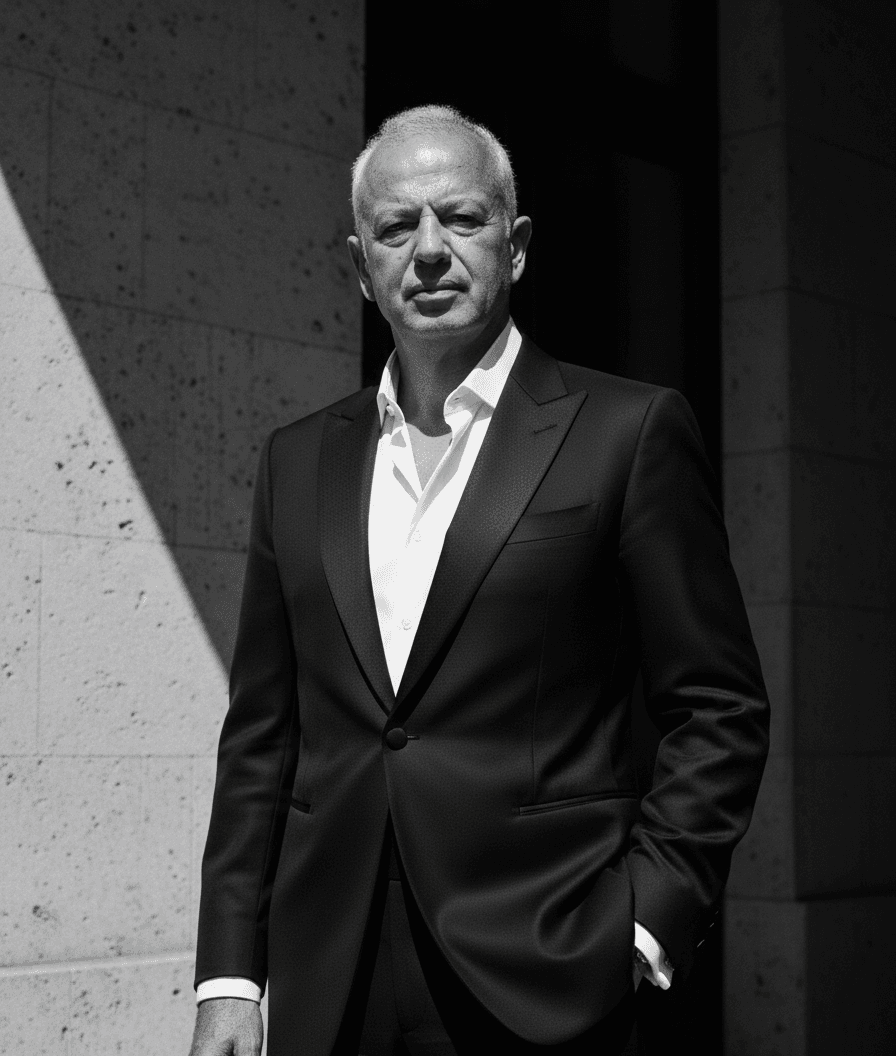
What distinguishes successful family-business reinvention from the kind that damages trust or weakens continuity?
The successful reinventions protect the soul and change everything else. The damaging ones do the reverse — they preserve the org chart and the old habits while quietly hollowing out the thing that made people trust the business in the first place. The mistake families make is treating legacy as a museum. They think honouring the founder means freezing his choices, when honouring him usually means having the courage he had, to make new ones.
The human dimension is where it breaks. Succession isn't a legal event, it's an emotional one, and the structural work fails when nobody has done the emotional work. A founder who hasn't truly decided to let go will sabotage the cleanest governance plan ever written, often without knowing it. The next generation needs permission, not just authority — and those are very different gifts.
What I tell families is this: be ruthless about what you change and reverent about why the business exists. Keep the promise, replace the methods. The trust your name carries was built on a commitment, not a process. Protect the commitment. Everything else is fair game.
How Should Markets, Clients, and Destinations Compete?
Question 8
Across CEOs, founders, family businesses, and destinations, what leadership patterns repeat more often than people expect?
More than anything, I see leaders who are afraid of subtraction. Across every environment — the founder, the family board, the destination authority — adding is easy and removing is terrifying. Everyone wants to launch; nobody wants to kill. So things accumulate: initiatives, products, markets, headcount, complexity. And complexity is where clarity goes to die.
The second pattern: people overestimate what they control and underestimate what they're responsible for. They obsess over the things they can't really move — the market, the competition, the economy — and neglect the few things that are entirely theirs, like what their organisation actually stands for. Third, and this cuts across all of them, leaders confuse urgency with importance constantly.
The urgent thing is loud and arrives with a deadline. The important thing is quiet and waits patiently while you ignore it. Weak leadership is mostly just a lifetime of attending to the loud at the expense of the quiet. None of this is about intelligence. The people I work with are smart. It's about the discipline to do less, better — which is the hardest discipline there is, because it never feels productive in the moment.
Question 9
You argue destinations should grow in value, not just in visitor numbers. What does a high-quality destination strategy look like today?
A serious destination strategy starts by admitting that more visitors can make a place poorer. We have the receipts now. Look at parts of the Cyclades — what people are calling the Mykonisation of the islands. Places that were singular, that you travelled across the world to experience, optimised themselves into something you can find anywhere. They filled every bed and lost the reason anyone wanted the bed.
Authenticity, once you industrialise it, stops being authentic — and authenticity was the entire product. So a high-quality strategy measures the right things on purpose. Not arrivals, but value per visitor, and value left behind in the place. Not occupancy, but whether the people who live there still want to.
Positioning means choosing who the destination is genuinely for and accepting it isn't for everyone — the same discipline a strong brand needs. Reputation means the experience matching the myth. And there has to be accountability: a destination can't just earn a label and coast. The French understood this — a Palace label is no longer a permanent trophy, it's a standard you re-prove. Greece has no equivalent. We hand out reputations and never check them again. That's the gap.
Question 10
For BRICS and emerging-market readers, which lessons from European brand, destination, and leadership strategy travel well across borders — and which do not?
The principles travel; the playbook doesn't. What crosses every border is this: trust compounds, clarity wins, and authenticity can't be faked at scale. A founder in São Paulo or Johannesburg or Mumbai faces the same fundamental trap as one in Athens — the temptation to chase visible volume over durable value. That's human, not European. Discipline as a competitive asset is universal.
What does not travel is the specific content of positioning. European luxury often trades on restraint, age, understatement, the quiet flex — and that register can read as weakness, or even arrogance, in a market where confidence is expressed more openly and abundance signals success rather than vulgarity. The mistake is to copy the aesthetic instead of the logic.
The logic is: know precisely who you're for, deliver more than you promise, and refuse the rest. The expression of that logic should be unmistakably local. I'd tell a BRICS leader to steal our discipline and ignore our taste. Borrow the question — “what makes us irreplaceable here?” — and answer it in your own market's language, not ours. The strategy is portable. The costume is not.
Question 11
Which sectors or leadership environments face the greatest pressure to rethink what competitiveness means over the next three to five years?
Hospitality and tourism, first — because they're getting global visibility faster than they're building the strategic depth to deserve it, and a place can be discovered and ruined in the same five years now. Social media hands a fishing village a million visitors before it has any idea who it wants to be. That's not opportunity, that's exposure without armour.
Second, founder-led companies hitting the scale where the founder's instinct stops being enough and they haven't built anything to replace it. The thing that got them here actively prevents what's next, and most won't see it until it's expensive. Third, family enterprises facing succession in real time — an enormous transfer of businesses to a generation with different values, in a world that has changed underneath the original model.
And luxury broadly, everywhere. Luxury sold its scarcity for growth and is now discovering that when everyone can have it, no one wants it. The whole category has to relearn the discipline of no. What connects all four is the same thing: visibility and scale arriving faster than judgment. The real question of the next five years isn't how do we grow. It's what are we willing to give up to remain worth choosing.
What Will Matter Most in Leadership and Positioning Next?
Question 12
When leaders face complexity and too many options, what questions should they ask before the next strategic move?
When a leader is buried in options, the problem is rarely a shortage of analysis. It's a shortage of refusal. So I give them a short, uncomfortable set of questions. First: if I do this, what am I no longer able to do? Every yes is a no to something — name the no.
Second: does this make us more ourselves or less? If it blurs who you are, it's expensive no matter what it earns. Third: is this urgent or important? Be honest, because they feel identical in the moment and they are not the same thing. Fourth: who exactly is this for, and am I comfortable being useless to everyone else?
If you can't name who it's not for, you haven't made a decision, you've made a wish. Fifth, the one people hate: what would I do if I trusted my judgment instead of seeking more data? Usually they already know the answer and are using analysis to delay the courage. The framework isn't really about finding the right move. It's about exposing the move you've been avoiding because it requires giving something up.
Question 13
What do many senior leaders still misunderstand about trust today?
That it's an outcome, when it's actually a constraint. Leaders talk about “building trust” as if it's a deposit you make and then draw down — be likeable, communicate well, and the balance grows. But trust isn't built by what you say. It's built by what you consistently refuse to do, especially when doing it would have been profitable.
Trust is the accumulated evidence that you'll behave the same way when no one is watching as when everyone is. That's why it's a constraint, not a campaign — it costs you, in real money, in the moments you're tempted to cut the corner. The leaders who don't understand this treat trust as a communications layer painted on top of the business. The ones who do treat it as a limit on their own behaviour.
And here's the part that should sober people: trust is wildly asymmetric. It accrues in tiny increments over years and collapses in a single afternoon. You can't sprint to rebuild it. In a market that now moves at the speed of a screenshot, that asymmetry isn't a soft value. It's the hardest competitive math there is.
Question 14
Advising a leader entering reinvention in 2026 — what should they stop doing immediately, and what should they protect at all costs?
Stop performing. Immediately. Stop the posting, the announcing, the chasing of every signal that someone, somewhere, approves of you. Reinvention done in public, for applause, isn't reinvention — it's theatre, and theatre is exhausting and it lies to you about whether you're actually getting anywhere. Most leaders entering a hard transition spend their scarcest resource, attention, on being seen handling it well. Spend it on actually handling it instead.
And stop adding. In a reinvention the instinct is to launch your way out — new things to signal momentum. Wrong direction. You reinvent by subtracting until what remains is true. What to protect at all costs: the core promise. The single thing your name has meant to the people who trust you.
Everything else — the methods, the markets, the model, the aesthetics — is negotiable and probably should change. But the promise is the only asset that appears on no balance sheet and can't be rebuilt once it's gone. Protect it like it's the business, because it is. Change everything you do. Guard the reason you do it.
Question 15
Looking ahead, which shifts do you expect to matter most in leadership, market positioning, and destination strategy over the next few years?
Attention is collapsing as a strategy, and almost no one has accepted it yet. For two decades the game was visibility — be seen, be everywhere, win the feed. AI is about to flood every channel with infinite, competent, frictionless content, and when everyone can manufacture noise at zero cost, noise becomes worthless. Attention won't be the scarce resource anymore. Trust will.
The next decade belongs to whoever is still believable when nothing else is — and that favours the disciplined, the specific, and the genuinely authentic, precisely because those things can't be generated on demand. The second shift: in tourism, the dawning recognition that quality and carrying capacity are strategy, not sentiment. The destinations that protected their character will look very wise very soon; the ones that sold it will be doing expensive repair work.
Third, a quiet rehabilitation of human judgment. As analysis becomes infinite and free, the rare and valuable thing becomes the courage to decide. Anyone can have the data now. Fewer and fewer people can choose. The leaders who matter next won't be the best informed. They'll be the clearest.
“When content becomes free and infinite, trust becomes the only scarce asset left.”

Quick Insights
Three words that define serious competitiveness today: Clarity. Trust. Refusal.
One quality you value most in long-term relationships: Candour — the relationships that last are the ones where the truth survives the discomfort.
One misconception people still have about strategy, reputation, or growth: That bigger and stronger are the same thing. They are almost always opposites.
One emerging shift serious readers should watch more closely: When content becomes free and infinite, trust becomes the only scarce asset left.
One piece of advice for a leader overwhelmed by complexity: Subtract before you add. Complexity is rarely a problem of too little — it is almost always a problem of too much.
Connect with Dimitrios Triadafillidis
Dimitrios Triadafillidis is the Founder & CEO of Melior Tempus, a boutique strategy and advisory firm working with hotel owners, CEOs, and destination leaders across Europe and the Mediterranean. If this conversation raised a question relevant to your own leadership, positioning, or destination challenge, you are welcome to reach out directly.
Website: meliortempus.com/meet-us
Email: ceo@meliortempus.com
LinkedIn: linkedin.com/in/triadafillidis
Key Points
Q: What does “better, not bigger” mean in strategy today?
It means stronger, narrower, and more coherent growth rather than expansion for its own sake. In this interview, Dimitrios Triadafillidis argues that the strongest businesses grow deeper, not simply wider, and that durable competitiveness depends on clarity, trust, refusal, and the discipline to say no.
Q: How should leaders think about trust in 2026?
They should treat trust as a constraint, not a campaign. In Triadafillidis's view, trust is built by what leaders consistently refuse to do, especially when cutting the corner would have been profitable, and it accrues slowly but can collapse in a single afternoon.
Q: What is performative growth?
Performative growth is growth that has to keep announcing itself. Triadafillidis distinguishes it from strategically grounded growth by asking whether a business earns more per customer over time, sharpens its identity as it grows, and can clearly name what it is refusing.
Q: What makes destination strategy high-quality today?
A high-quality destination strategy measures value, not just arrivals. In this conversation, Triadafillidis argues that serious destinations must protect authenticity, define who the destination is genuinely for, align experience with reputation, and re-prove quality rather than treating prestige as a permanent trophy.
Q: What should leaders ask before the next strategic move?
They should ask what this move makes impossible, whether it makes the organisation more itself or less, whether the issue is urgent or important, who the decision is really for, and what they would do if they trusted their judgment instead of seeking more data.