Luxury Business
Coyle on Contemporary Figuration, Scale, and the Discipline Behind Lasting Artistic Value
Emma Coyle explains how slow, disciplined painting transforms current print-media imagery into contemporary figurative art shaped by line, scale, and long-term artistic integrity.
08.07.2026 by Editorial Team
From the editors
Luxury Business
Published: July 2026 | Last updated: July 2026
Emma Coyle’s work is defined by slow, drawing-led contemporary figuration that turns current print-media imagery into paintings built for durability rather than speed. In 2026, that matters because her practice resists both nostalgia and digital acceleration, insisting instead on line, scale, and disciplined visual judgment.
This interview gives readers a precise view into how Coyle selects images, develops series, thinks about artistic integrity, and measures the long-term value of a body of work. It also shows how a painter can remain current without becoming trend-driven, and why concentration, technical rigor, and belief in one’s own work still matter in the contemporary art world.
For B2BRICS Magazine, Emma Coyle represents a serious intersection of art, collecting, international visibility, and premium cultural positioning. Her answers show a painter who works across long cycles of development, values museums and galleries over digital noise, and sees credibility not as a branding exercise but as the result of decades of focused studio practice.
What Shaped Emma Coyle’s Artistic Worldview?
Question 1
Looking back at your early years in Dublin, what first drew you toward making art, and what convinced you that painting would become a serious long-term commitment rather than a passing interest?
What first drew me to art was the simple act of making. I have always taken enjoyment from the planning and process of making art in any material.
When I started studying art in the 1990s, I worked across ceramics, print, photography, graphic design, sculpture, drawing, and painting. I do not think there was one decisive moment that convinced me painting would become my focus; I simply had a stronger passion for it than for any other medium. Choosing an art medium depends on the ideas you have as an artist and on what you want to communicate visually. Artists do not think in weeks or months but in years and decades, and I have always believed that people are either artists or they are not. In that sense, art picks you rather than the other way around.
“Artists do not think about time in weeks or months but in years and decades.”
Question 2
You have said that visits to the Guggenheim and the Whitney in New York, and encounters with artists such as James Rosenquist, helped shape your imagination early on. What did those experiences unlock for you at the time?
Those visits to New York opened my eyes to the endless possibilities within art. I was nineteen, had only been studying and working in art for two years, and suddenly saw a much larger field of ambition and experimentation.
It was the scale of the museums and the strength of the American art I encountered that affected me most. James Rosenquist, Jasper Johns, Duane Hanson, and Claes Oldenburg were major early influences because of their use of materials, compositions, and scale. What that period taught me was that experimentation is one of the best forms of education an artist can receive early in a career. You learn not to hesitate, not to hold yourself back, and not to replicate what has already existed.
Question 3
You have been painting for more than twenty years and have spoken about moving from one series to the next. How has that long continuity shaped your identity, discipline, and judgment as an artist?
Long continuity has made me stricter and more deliberate about what deserves to become a painting. Development in art is slow, and it is not only painting skill that progresses but also the preliminary work from which the final work emerges.
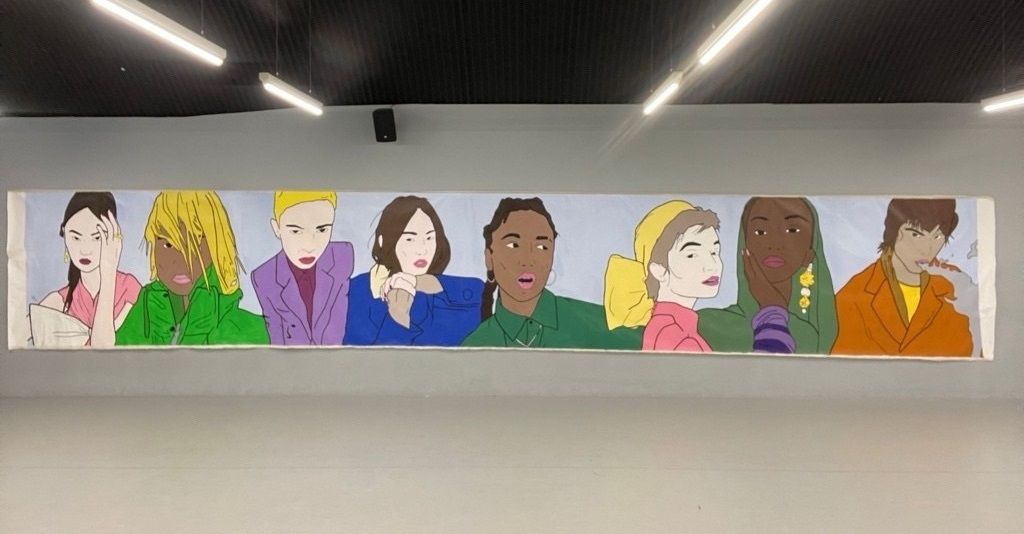
I work very differently now than I did twenty-five years ago. My preliminary work for a series can exceed one hundred drawings, and I may only paint five works from that material. I am much stricter now about why I choose certain images, and each painting must have both a reason and a resolve. In the last ten years, my focus has expanded from colour and linework into scale, with canvases reaching up to ten meters in length. I do not spend time thinking about my identity or about viewers’ perceptions of me as an artist; I focus on the progression of the paintings themselves.
How Does Emma Coyle Build a Painting Series?
Question 4
Much of your work begins with current print-media advertising imagery rather than nostalgic archival reference material. What attracts you to contemporary source images, and what do they allow you to say that older imagery does not?
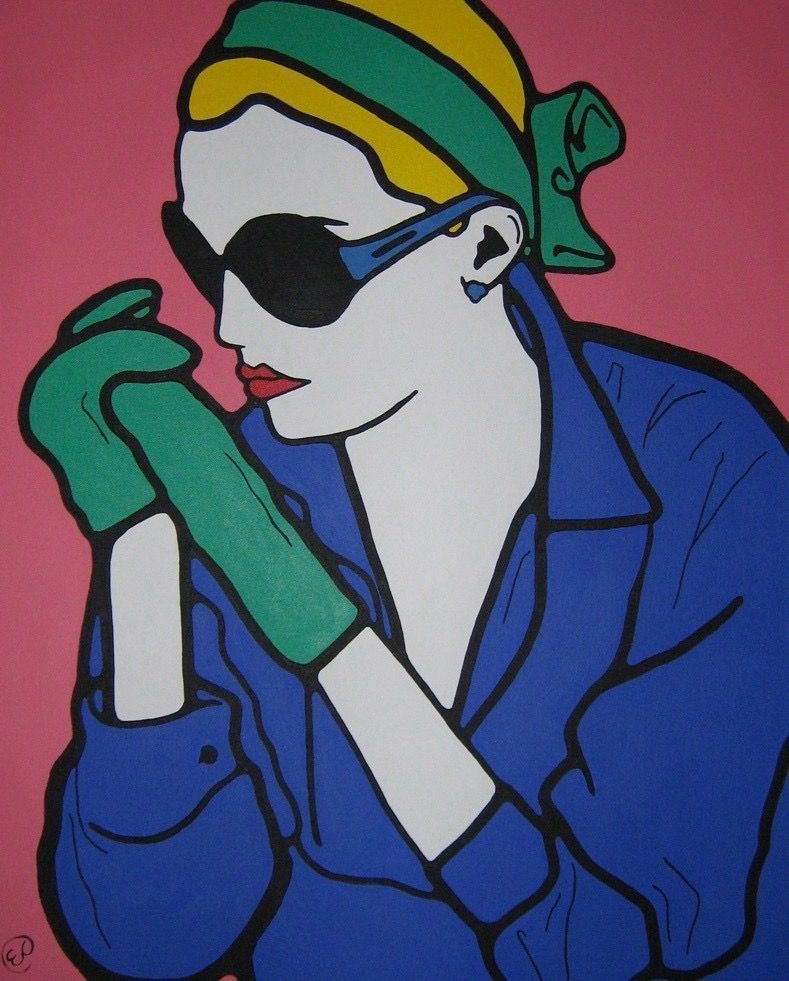
Current source imagery allows the paintings to represent now rather than nostalgia. I still consider my figurative paintings as Pop art, and one of Pop’s foundational ideas was the use of contemporary advertising media and imagery as a starting point.
In the past, I worked with Japanese print advertisements from the 1920s, Silver Screen film stills from the 1940s, and fashion photography from the 1960s. Over the past ten years, however, I have focused on current print advertising images because I wanted my paintings to feel rooted in the present. Using current imagery gives the finished paintings greater impact as contemporary art. What I do with these images is not replicate them but paint my interpretation of them.
“What I do with these images is not replicate but paint my interpretation.”
Question 5
Your process appears highly structured: collecting magazines, selecting images, tracing, redrawing, editing, and then building a complete series over time. How do you know when an image is worth pursuing and when a series is truly resolved?
An image is worth pursuing when its line is strong enough to sustain a painting. I work at a constant and steady pace, and I am never interested in simply producing painting after painting without fulfillment.
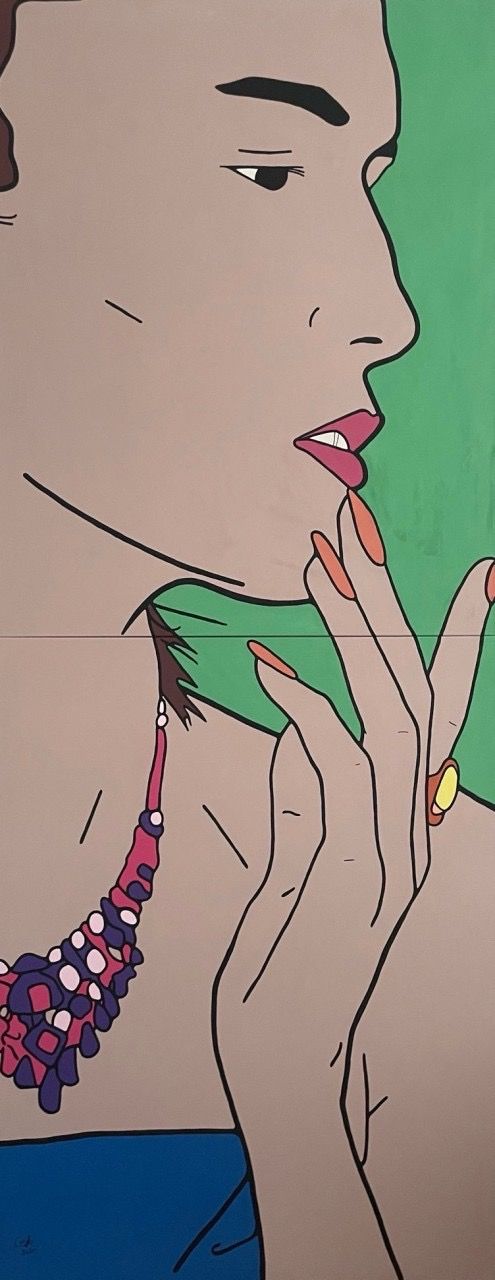
I can spend a few years collecting magazines and then weeks tearing out pages with forms that interest me. Because I do extensive preliminary drawings, I need images that contain a strong line. Spending up to six months on preliminary drawings helps me make sure the images I choose will be the strongest ones to translate into paintings. I always begin with linework, then move into composition and colour on the canvas. My series have ranged from three paintings to nearly thirty, but I am currently focused on small series of large-scale works. Collective Selection is a good example of working on a large scale while keeping the number of paintings to a minimum. A series feels resolved when the completed works carry the visual impact I need, and only the process of making each painting shows how far that series should expand.
Question 6
Commentary on your work often notes bold contour, controlled colour, and female figures who appear self-possessed rather than passively observed. How do you think about representation when you build these images?
I think first about colour, linework, and composition rather than imposed narrative. My figurative work begins with images that current media itself uses to represent society, but the finished work is always a reimagined image.
I do not add a narrative while making a painting. That part belongs to the viewer if they choose to read further into the work. I have always been more interested in the technical side of what goes into making a painting than in directing what viewers think a painting represents.
What Gives Emma Coyle’s Work Collector Relevance and International Weight?
Question 7
Your paintings sit in dialogue with Pop Art, fashion imagery, and contemporary visual culture, yet they do not feel like quotations. How do you maintain a recognisable relationship to art history without becoming derivative or nostalgic?
Knowledge of art history is essential because it helps an artist understand both direction and restraint. No professional artist wants their work to be the same as another artist’s.
Artists need their own ideas to be visible in their own work, and that distinction is part of what allows a practice to remain relevant within art history. Knowledge of historical and contemporary art also helps an artist speak more clearly about their own work. Like most artists, I spend time every year in galleries and museums because looking and learning remain part of development. Most artists have a hunger for knowledge, not only in art but more broadly, and that helps keep the future of their own work alive.
Question 8
For collectors and serious readers, what do you believe gives a body of work durability beyond first visual impact?
Durability comes from the artist as much as from the object. Art is always experienced individually, and what one person loves another may dismiss.
Longevity is shaped by the artist’s level of skill and by what they invest of themselves in their career. We see great art when we can see the artist’s discipline and their belief in their own work. Art can withstand time when it is made by an artist with a strong background, real devotion, and a desire to create work that can be accepted within art history. Artists are also their own critics, and that internal standard matters.
“We see great art when we can see the artist’s discipline and their belief in their own art.”
Question 9
You have built your practice between Ireland and London and have also spoken about international gallery exposure and solo shows abroad. How has working across those contexts influenced your sense of audience, ambition, and artistic positioning?
Working internationally has given me a clearer understanding of how the art world actually functions. The more you work with people, galleries, and institutions across contexts, the more clearly you see both the opportunities and the realities of the field.
You learn how you want to work and what works for you. The exhibiting side of art is a business environment, and it is very different from being in the studio making the work. I never let myself overthink viewers or audience because the world is too large for that frame of mind. What has mattered most to me is meeting agents, writers, gallerists, and other artists who share the same passion for art. Their support has had a major impact on me. My aim has always been to produce accomplished art of a high standard, work that means something within the art world and not only within the walls of my studio.
How Does Emma Coyle Protect Artistic Integrity in 2026?
Question 10
In an art world saturated with images and constant digital circulation, how do you protect concentration, judgment, and the slower internal pace required to build meaningful work?
I protect concentration by remaining private and by keeping the work itself at the centre of everything. I only use LinkedIn for art-business connections, and I have never been driven by the idea of becoming a household name.
I have no real interest in social media or current trends because they move too quickly. For me, the art world is in studios, galleries, and museums, not on a screen. Every artist is in control of how their work is seen and how they themselves want to come across. What keeps an artist grounded is not online approval or even sales but focus on the work. An art career is built over decades of hard work and dedication, and regardless of how society changes, artists will continue to produce art. That is the most important thing.
Question 11
What kinds of pressure do artists face today when trying to balance artistic integrity, market visibility, and financial survival, and which compromises do you consider unacceptable?
The greatest pressure is to let financial logic replace artistic purpose. For me, an artist’s integrity is the most valuable thing they have, and compromising the work for money is unacceptable.
I can only speak from my own experience, but I have always believed that if you are head-strong and make art that is your own, you will continue to make credible work. I appreciate advice, but an artist must ultimately stay with their own ideas. Many of the most famous artists in history supported themselves through other jobs, and I have always worked part-time while continuing my studio practice and working with galleries and agents on visibility. That has allowed me to take risks and progress in the studio without having to consider selling out. Wealth cannot be the reason for making art. It is better to sell the art you make than to make art for sales.
“It is better to sell the art you make than to make art for sales.”
Question 12
Looking ahead, what do you most want the next phase of your work to deepen or test — visually, intellectually, or materially?
The next phase of my work is focused on museum exhibitions, scale, and new directions in the studio. It has become very important to me for my art to be involved in museum shows and collections internationally.
Last year I exhibited in a South Korean art museum, and I currently have a painting in a museum show in Lecce, Italy. I am also currently working with Chrissy Moore Art Advisory and will be exhibiting with them in London this September. In the studio, scale continues to matter greatly to me. I am working on a ten-meter-tall painting consisting of multiple figures, and I am also developing a new abstract series based on water. I can plan up to three years ahead in the studio, but those plans often change as the work develops, because ideas create new ideas.
Visual References
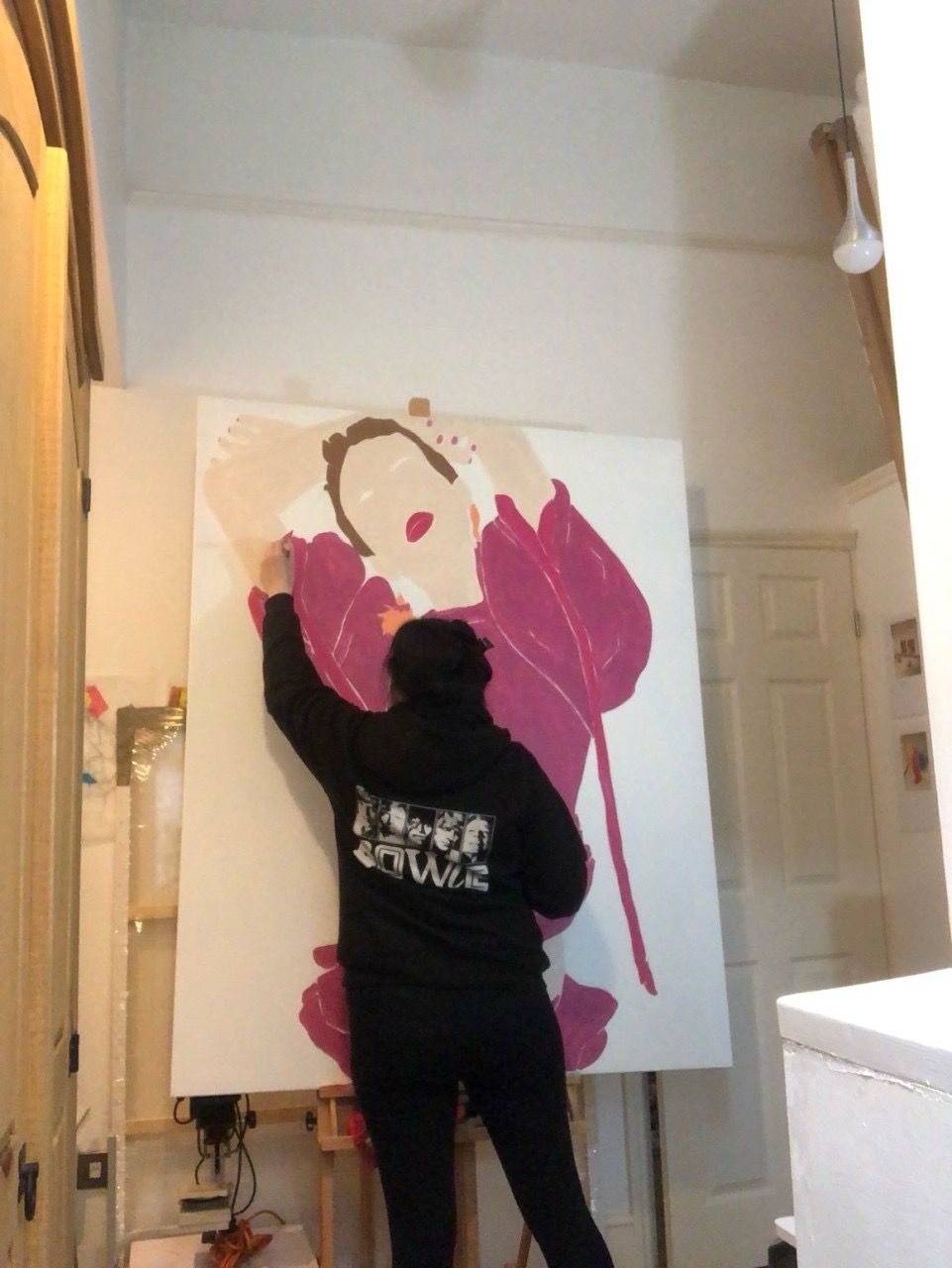
Visual reference: Studio image London England
Caption: Studio image, London, England.
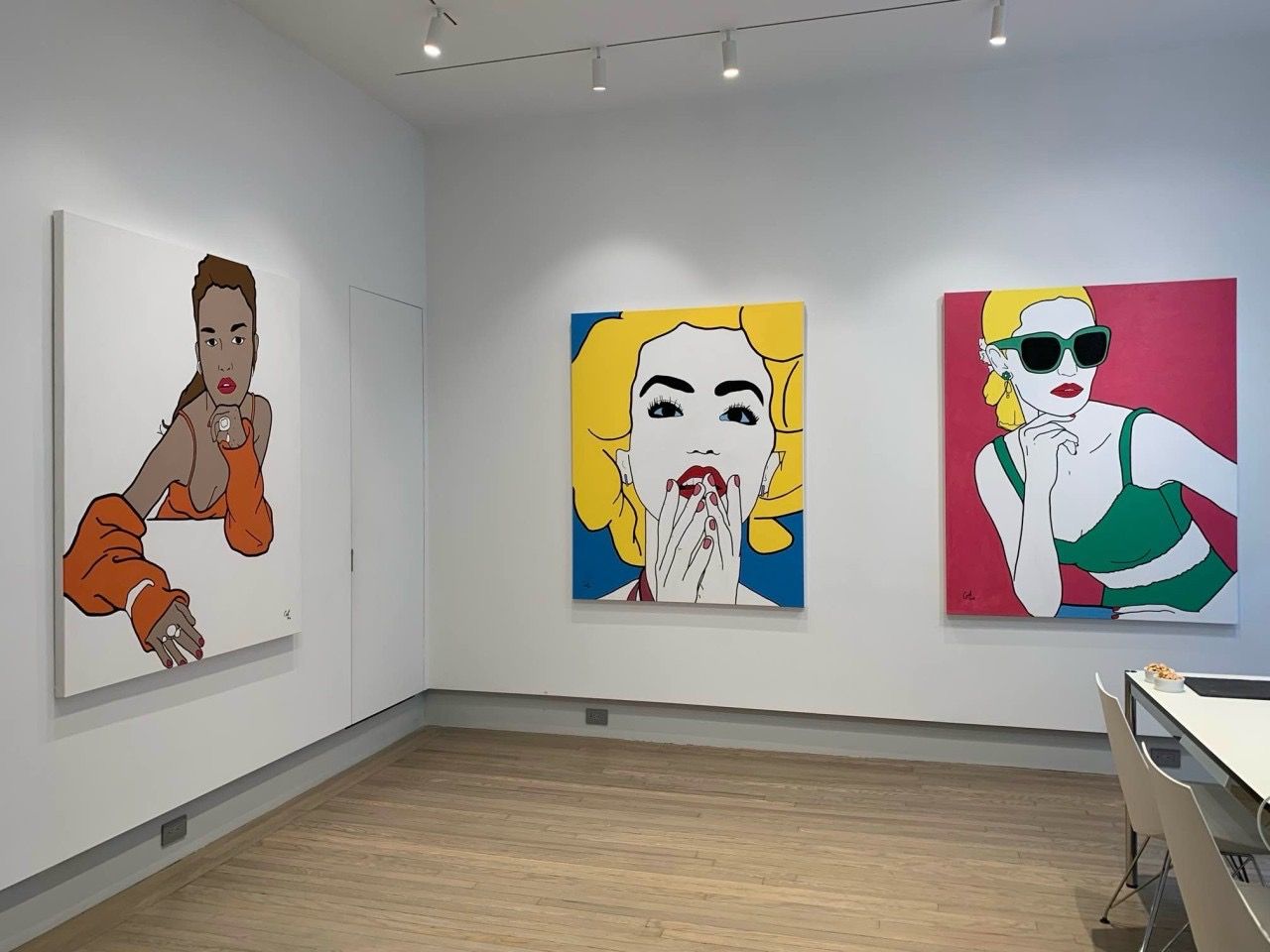
Visual reference: Helwaser Gallery Maddison Ave NYC Solo show 2022
Caption: Helwaser Gallery, Maddison Ave, NYC. Solo show, 2022.
Selected Works
Artwork: 25.02
Caption: 25.02. Acrylic on canvas, 2025. 304 x 122 x 4 cm.
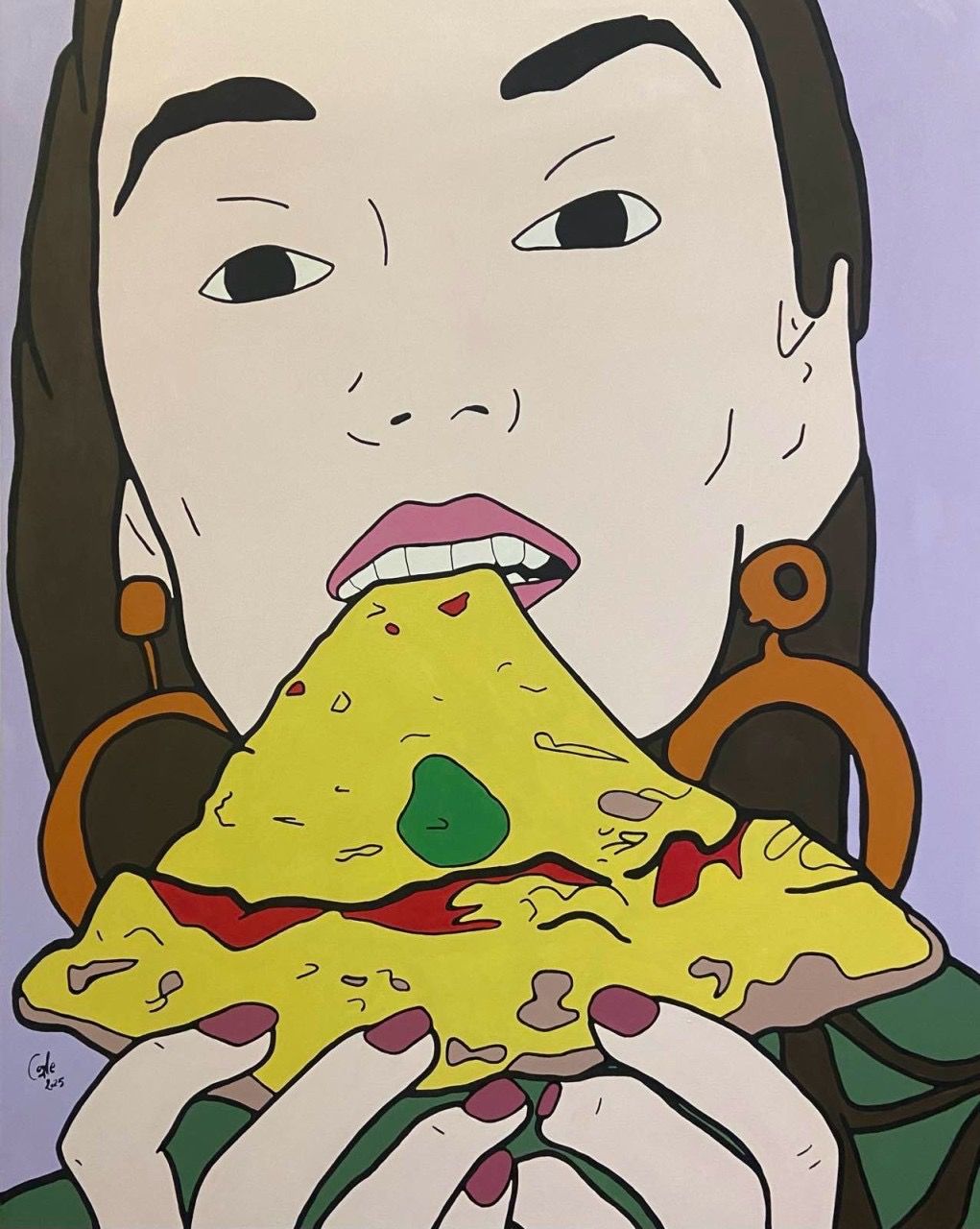
Artwork: The Slice
Caption: The Slice. Acrylic on canvas, 2025. 152 x 122 x 4 cm.
Artwork: 25.01
Caption: 25.01. Acrylic on canvas, 2025. 244 x 91 x 4 cm.
Artwork: Collective Selection
Caption: Collective Selection. Acrylic on canvas, 2023–2024. 160 x 964 cm.
Artwork: Zero 2
Caption: Zero 2. Acrylic on canvas, 2008. 76 x 61 x 2 cm.
Key Points
Q: Who is Emma Coyle?
Emma Coyle is a London-based visual artist born in Dublin, Ireland, in 1981. She has developed her figurative painting practice over more than twenty years and is known for transforming current print-media imagery into contemporary paintings shaped by linework, composition, scale, and disciplined series-based development.
Q: What defines Emma Coyle’s painting process?
Emma Coyle’s process is defined by slow selection, extensive preliminary drawing, and strict visual judgment. She can spend years collecting magazines, months developing drawings, and then reduce that material to a small number of paintings whose line, composition, and colour are strong enough to sustain a resolved series.
Q: Why does Emma Coyle use current advertising imagery in her art?
She uses current advertising imagery because she wants the paintings to represent the present rather than nostalgia. While her work remains informed by Pop art, her aim is not quotation or replication. She takes contemporary print-media imagery and turns it into painterly interpretation with a distinctly current visual charge.
Q: What gives Emma Coyle’s work long-term value?
For Emma Coyle, long-term value comes from discipline, skill, and belief in the work. Viewers will always respond individually, but a body of work endures when it reveals the artist’s seriousness, technical control, and devotion to building a credible practice over time rather than producing work for immediate effect alone.
Q: How does Emma Coyle view artistic integrity and commercial pressure?
She sees integrity as the artist’s most valuable asset. Market visibility and financial survival matter, but they should not dictate the work itself. Her position is direct: wealth cannot be the reason for making art, and it is better to sell the art you make than to make art for sales.
Q: What is next for Emma Coyle’s work?
The next phase of her work is focused on museum exhibitions, larger scale, and new formal experimentation. Alongside current international exhibition activity, she is working on a ten-meter-tall multi-figure painting and developing a new abstract series based on water, while continuing to expand her museum presence.