Investors & Dealmakers
Isabel Conde on Capital Access, Cross-Border Trust, and the Africa-GCC Corridor
Isabel Conde explains how trust, positioning, and investor readiness shape capital access across the UAE, Singapore, and the Africa-GCC corridor.
06.07.2026 by Editorial Team
From the editors
Investors & Dealmakers
Isabel Conde’s central argument is that durable cross-border growth is not driven by product alone, but by trust, positioning, timing, and access. In this written interview, she explains why strong companies often fail to raise capital not because they lack opportunity, but because they have not yet become investable in the language serious investors trust.
Her perspective is especially relevant now because she operates across three demanding environments at once: the UAE, Singapore, and the Africa-GCC corridor. That combination makes this conversation highly relevant for founders, investors, and senior executives building across BRICS and emerging-market ecosystems.
From the editorial desk of B2BRICS Magazine, this interview stands out as a study in how serious operators build credibility before they seek capital, and how strategic judgment becomes the real bridge between markets. It is published in the spirit of B2BRICS editorial standards: premium, international, answer-first, and grounded in real cross-border experience rather than surface-level commentary.
How Did Multiple Geographies Become a Strategic Advantage?
Question 1
You have built your career across Lisbon, Dubai, and Singapore. At what point did you realise that operating across multiple geographies was not a limitation, but your core competitive advantage?
Answer
There was not one single dramatic moment, but rather a pattern that became impossible to ignore. Coming from Lisbon, I was initially very aware that I was not starting inside the "obvious" capital ecosystems. But once I began working across Dubai, Singapore, and emerging-market corridors, I realised that what many people see as fragmentation is often where the real edge sits.
Different markets reveal different truths. Europe gave me structure, discipline, and a strong sense of relationship management. Dubai taught me speed, access, and how capital, government, and private enterprise often move in close proximity. Singapore sharpened my understanding of institutional discipline, long-term planning, and the importance of credibility in highly selective ecosystems. When you can read all three environments at once, you stop thinking like a local operator and start thinking like a strategic bridge.
The turning point was recognising that many founders and investors were not failing because they lacked opportunity, but because they lacked someone who could translate them credibly between markets, cultures, and decision-making styles. That became my advantage: not simply being present in multiple geographies, but understanding how to create trust, positioning, and access between them.
Question 2
Verona Investments and EVARON serve companies serious about expansion, credibility, and long-term value creation. How did you arrive at this positioning, and what have you deliberately chosen not to pursue along the way?
Answer
This positioning came from seeing the same problem repeatedly: many companies say they want growth, but what they actually want is visibility, quick access, or capital before they are structurally ready for any of it. Over time, I became far more interested in working with founders and businesses that understood expansion as a serious exercise in infrastructure, trust, governance, and market fit, not just as a fundraising event or a branding exercise.
Verona Investments and EVARON were built around that philosophy. We work best where there is genuine ambition, but also enough maturity to accept that entering new markets, raising the right capital, or building strategic partnerships requires preparation and discipline. We are not only looking at whether a company can raise money; we are looking at whether it can absorb the right money, deploy it intelligently, and build long-term value from it.
Equally important is what I chose not to pursue. I have deliberately stepped away from purely transactional mandates, opportunistic introductions without strategic alignment, and founders who want institutional outcomes while operating with informal standards. I am also careful around businesses whose only objective is speed without substance. In cross-border work, the wrong client costs more than time, it can cost reputation, trust, and access. That is a price I am not willing to pay.
Question 3
You operate across private-sector, institutional, and government-linked environments. What does it take to move credibly across those worlds without losing clarity, trust, or strategic focus?
Answer
The first requirement is understanding that each of those worlds runs on a different logic. The private sector often optimises for speed, competitive advantage, and execution. Institutional environments optimise for risk management, process, governance, and long-term resilience. Government-linked environments often involve a wider layer of strategic priorities, diplomacy, national development goals, and reputational considerations. If you approach all three in exactly the same way, you lose credibility very quickly.
For me, moving credibly across those environments comes down to three things: clarity, discipline, and translation. Clarity means being very precise about what the opportunity is, what the risks are, and what the realistic outcomes look like. Discipline means respecting process, confidentiality, and the pace required by each stakeholder group, even when it is slower than the market would prefer. Translation is perhaps the most important skill: helping a founder understand what an institutional investor needs to see, or helping an investor understand the local realities and constraints of a company entering a new market.
I do not believe in changing the core message depending on the room. I believe in adapting the language, framing, and level of detail without changing the underlying truth. That is how trust is preserved.
Quotable insight: “When you can read all three environments at once, you stop thinking like a local operator and start thinking like a strategic bridge.”
What Makes a Company Truly Investable?
Question 4
In your experience, what is the most common reason a fundamentally strong company fails to raise capital successfully, not because of the product itself, but because of a readiness, narrative, or positioning gap?
Answer
The most common failure is not weak product, it is misalignment between what the company is and how it presents itself to capital. I see strong businesses underperform in fundraising because they have not done the strategic work of becoming investable in the eyes of the market they are targeting.
Usually the gap appears in one of three places. First, the narrative is unclear: the founder knows the business intimately, but cannot explain in a disciplined way why this company matters now, why this market is attractive, and why this team is the one capable of executing. Second, the company is operationally stronger than its materials suggest---poor investor decks, weak financial storytelling, vague use of proceeds, or an inability to answer obvious questions around margins, governance, risk, and expansion logic. Third, the founder approaches capital too early or too casually, assuming access is enough without understanding that serious capital is evaluating not just the opportunity, but the maturity of the operator.
A recurring pattern is founders asking for growth capital when what they really need first is strategic preparation. Capital does not compensate for lack of clarity. In many cases, the company is not being rejected because it is bad, it is being rejected because it has not yet learned how to communicate seriousness in the language investors trust.
Question 5
The UAE and Singapore are both seen as capital hubs, but they operate with different networks, cultures, and decision-making dynamics. How do you advise founders who want to engage both ecosystems without making avoidable mistakes?
Answer
The first thing I tell founders is to stop treating the UAE and Singapore as interchangeable "capital hubs." They are both powerful ecosystems, but they reward very different behaviours.
The UAE is highly relationship-driven. Access matters, but context matters even more: who is introducing you, how you are positioned, whether there is a strategic fit with the region, and whether you understand how decisions are often influenced by trust, reputation, and timing as much as by the numbers. A founder can have a compelling business and still fail in the UAE if they enter too aggressively, too transactionally, or without the right local framing.
Singapore is different. It is more process-oriented, more structurally disciplined, and generally less forgiving of narrative without substance. Investors there will expect precision: financial discipline, governance readiness, regulatory awareness, and a very coherent expansion thesis. You are more likely to be tested on whether your company is institutionally ready, not just commercially interesting.
My advice is simple: do not run one generic fundraising strategy across both markets. Build a tailored market-entry and capital strategy for each. In the UAE, invest in relationship architecture, local credibility, and strategic introductions. In Singapore, invest heavily in readiness, data quality, governance, and disciplined investor communication. In both cases, founders need patience. The mistake is not ambition; the mistake is assuming access can substitute for preparation.
Question 6
You wrote that growth is not only about product, but about access, narrative, timing, and the right rooms. How would you translate that idea into a practical roadmap for a founder who is currently outside those rooms?
Answer
The first step is to accept that "the right rooms" are usually earned before they are entered. Founders often focus on outreach too early, when the real work should begin with readiness.
A practical roadmap starts with four layers. First, the company needs strategic clarity: what problem it solves, why now, what market it can realistically win, and what type of capital or partnership it actually needs. Second, it needs investor-grade packaging: a clear deck, disciplined financials, a credible use of proceeds, a sharp narrative, and evidence that the founder understands the questions serious investors will ask. Third, it needs market positioning: not just who to speak to, but how to be perceived in that ecosystem. That may include partnerships, thought leadership, advisory alignment, selective events, and relationship-building with intermediaries who already hold trust in the target market. Fourth, it needs a sequencing strategy---who to approach first, in what order, and for what purpose.
In practice, the timeline depends on the founder's starting point. For some, it can take 3--6 months to become properly ready; for others, particularly those entering a new geography or targeting institutional capital for the first time, it can take 9--12 months. The key is understanding that access is not the first milestone. Credibility is.
Quotable insight: “Capital does not compensate for lack of clarity.”
Quotable insight: “The key is understanding that access is not the first milestone. Credibility is.”
Why Is the Africa-GCC Corridor Being Repriced by Serious Operators?
Question 7
You recently joined the Board of Advisors at Africa GCC Council. What do both African and Gulf-side participants still underestimate about the Africa--GCC corridor, and what is quietly becoming more important than most people realise?
Answer
What both sides still underestimate is that the Africa--GCC corridor is not a single story. It is not "Africa" on one side and "the Gulf" on the other; it is a network of very different markets, regulatory realities, capital needs, and strategic ambitions. The operators who do best are the ones who move beyond broad narratives and understand where there is real sector fit, local alignment, and execution capacity.
On the African side, I still see businesses underestimating how important institutional credibility, governance discipline, and capital structuring are when engaging Gulf investors. On the Gulf side, I still see some participants underestimating how relationship-driven, locally nuanced, and execution-sensitive African market entry can be. Capital alone is not enough. The corridor rewards people who understand how to combine financing, trust, local partnerships, and patience.
What is quietly becoming more important is infrastructure around capital deployment rather than capital alone: strategic market-entry support, transaction trust, regulatory navigation, structured partnerships, and operators who can bridge both commercial ambition and institutional confidence. I also believe the next 18--24 months will reward those positioned around food security, energy, logistics, industrial processing, and platform businesses that connect African production capacity with Gulf capital and distribution strength. The opportunity is real---but only for those prepared to build with seriousness, not simply to extract value quickly.
Question 8
Across the markets you engage with --- UAE, Singapore, Africa, and the wider BRICS and emerging-market ecosystem --- where do you currently see the most underserved need for stronger capital infrastructure and strategic access?
Answer
One of the most underserved areas is not a single geography, but a category of company: credible mid-stage businesses in emerging markets that are too advanced for friends-and-family capital, but still not positioned in a way that makes institutional or cross-border investors comfortable. These businesses often have revenue, traction, and real market relevance, yet they remain trapped between potential and investability because the infrastructure around them is weak.
What they lack is not only money. They lack strategic access, investor preparation, governance support, structured partnerships, and people who can help translate local success into cross-border credibility. This is especially visible in the Africa-GCC corridor and in parts of the wider BRICS ecosystem, where there are strong businesses in sectors like energy, logistics, agriculture, industrial services, and trade-enabling platforms, but insufficient support around capital readiness and international positioning.
I also see a major gap for founders who are commercially capable but globally under-networked. Many of them do not need "more hustle"; they need a better architecture around them---better advisors, sharper positioning, better market sequencing, and access to the right rooms rather than more random exposure. In the next cycle, I believe those who solve the infrastructure around trust, access, and execution will create as much value as those deploying the capital itself.
Quotable insight: “The opportunity is real---but only for those prepared to build with seriousness, not simply to extract value quickly.”
What Signals Durable Leadership and Judgment?
Question 9
You work selectively. In practical terms, what signals tell you that a founder or company is genuinely serious about long-term value creation --- versus simply seeking access without the discipline to build something durable?
Answer
One of the clearest signals is how a founder responds when the conversation moves away from opportunity and toward discipline. Many people are enthusiastic when discussing capital, growth, and introductions. Far fewer remain equally engaged when the discussion turns to governance, reporting, hiring quality, risk, execution timelines, and the hard work required to become truly scalable.
I pay close attention to whether a founder wants access as a shortcut, or whether they see access as something they must be ready to honour. Serious founders usually have a healthy relationship with scrutiny. They do not need to have every answer, but they are willing to confront weaknesses in the business honestly, strengthen the infrastructure around them, and make decisions that are good for the company even when those decisions are slower, less glamorous, or personally uncomfortable.
One question that reveals a lot very quickly is: "If the right capital arrived tomorrow, what would break first inside your business?" The best founders answer with honesty and precision. They know where the fragilities are, whether in team, systems, reporting, or market execution. Founders who cannot answer that usually do not have a capital problem; they have a self-awareness problem. And in cross-border growth, that becomes expensive very quickly.
Question 10
Looking ahead 3--5 years, what structural shift in the global cross-border capital and partnership landscape do you believe remains underappreciated today, and how are you positioning Verona Investments and EVARON to stay ahead of it?
Answer
I believe one of the most underappreciated shifts is that cross-border capital will become increasingly relationship-led, corridor-specific, and trust-filtered rather than broadly global in the old sense. In other words, capital will still move internationally, but not in a frictionless way. It will flow through trusted networks, strategic corridors, and highly curated ecosystems where credibility, geopolitical understanding, and execution capacity matter as much as the underlying opportunity.
We are already seeing the early shape of this: founders needing more than fundraising support, investors demanding stronger governance and local intelligence, and entire growth strategies being influenced by supply chains, regulation, sovereign priorities, and regional alliances. The future will reward operators who can connect capital not just to a company, but to a market-entry thesis, a partnership architecture, and a credible path to execution across borders.
That is how I am positioning Verona Investments and EVARON. The focus is not simply on transactions; it is on building a stronger bridge between capital, market access, and strategic positioning across selected corridors---particularly the UAE, Singapore, and the Africa-GCC landscape. We want to sit where founders, investors, and strategic partners need more than introductions. They need judgment, structure, credibility, and someone who can help convert cross-border ambition into durable outcomes.
Quick Insights
Three words that define cross-border capital access today: Trust, positioning, timing.
One quality you value most in long-term client or partner relationships: Consistency.
One misconception people still have about raising capital in the UAE or Singapore: That access alone is enough.
One market or corridor serious readers should be watching more closely right now: The Africa--GCC corridor.
The book, person, or idea that most influenced how you think about business: The idea that capital follows trust long before it follows opportunity.
Bio
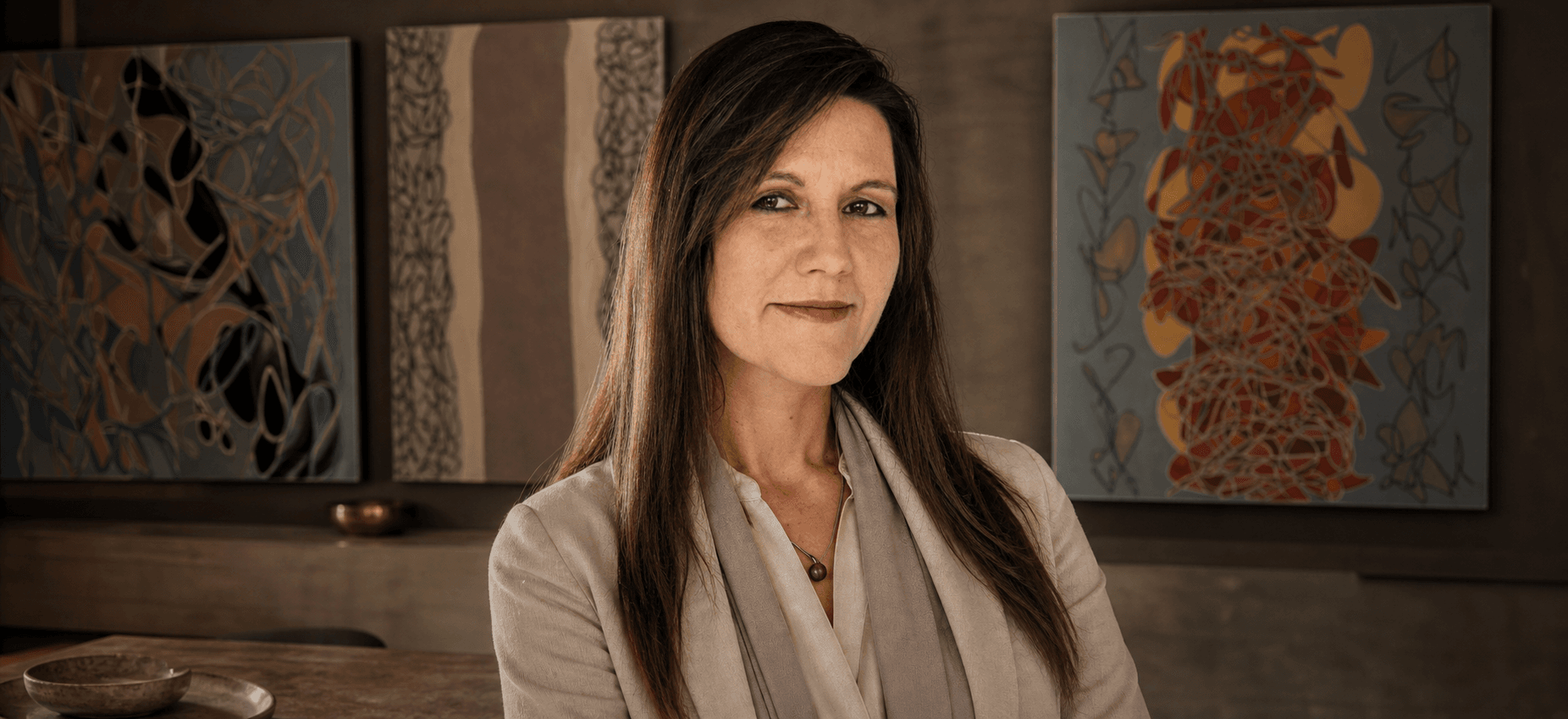
Isabel Conde is a cross-border business strategist and capital-access advisor operating across the UAE, Singapore, and the Africa-GCC corridor. She is CEO of Verona Investments and Co-Founder of EVARON, where she works with founders, investors, and growth-stage companies seeking strategic expansion, investor readiness, and credible entry into high-trust international markets.
Her work sits at the intersection of capital, market positioning, and cross-border execution. Rather than focusing only on fundraising, Isabel advises on the broader architecture required for durable growth: narrative, strategic partnerships, investor preparedness, market sequencing, and the relationship infrastructure needed to move credibly across private, institutional, and government-linked environments.
Known for her selective approach and long-term lens, she works with companies serious about building value, not just visibility. Her current focus includes the UAE--Singapore capital corridor, the Africa-GCC bridge, and the emerging-market ecosystems where access, trust, and disciplined execution increasingly determine who scales successfully.
Key Points
Q: Why do strong companies still fail to raise capital?
A: Because the problem is often not the product, but the gap between the business and how it is presented to capital. Isabel Conde argues that unclear narrative, weak investor materials, poor governance signalling, and premature fundraising are the most common reasons a capable company is judged as not yet investable.
Q: How should founders approach the UAE and Singapore differently?
A: The UAE rewards relationship architecture, local credibility, and timing-sensitive introductions, while Singapore rewards process discipline, governance readiness, and precision. A single generic fundraising strategy across both markets is, in her view, one of the most avoidable mistakes founders make.
Q: What matters more than access in cross-border growth?
A: Credibility matters more than access. Isabel Conde’s roadmap begins with strategic clarity, investor-grade packaging, market positioning, and thoughtful sequencing, because the right rooms are usually earned before they are entered.
Q: Why is the Africa-GCC corridor becoming more important?
A: Because the corridor is moving beyond broad narrative and toward serious execution around capital deployment, regulatory navigation, structured partnerships, and trust. She sees particular relevance over the next 18--24 months in food security, energy, logistics, industrial processing, and platform models connecting African production with Gulf capital and distribution.
Q: What tells you a founder is serious about long-term value creation?
A: Serious founders do not only want access; they are ready to honour it. They stay engaged when the discussion turns to governance, reporting, hiring, risk, and execution, and they can answer honestly what would break first inside the business if the right capital arrived tomorrow.