Global Leaders on BRICS
Welber Barral on Trade Law, Strategic Compliance, and Brazil in the Next BRICS
Welber Barral’s B2BRICS interview dossier focuses on trade law, compliance, investment strategy, and Brazil’s role in the next BRICS cycle.
03.06.2026 by Editorial Team
From the editors
Trade Market Entry
Published: June 2026 | Last updated: June 2026 | Format: Premium written interview
Brazil’s next trade cycle will be shaped less by market size alone than by how companies interpret regulation, compliance, industrial policy, and the changing architecture of BRICS cooperation. In Welber Barral’s view, the decisive advantage in Brazil does not come from speed or optimism alone. It comes from sequencing: mapping the full decision chain, pricing regulatory risk early, and treating trade compliance as a board-level strategic function rather than as a technical afterthought.
That makes this conversation especially relevant for B2BRICS readers across investment, trade, legal strategy, and market entry. Barral explains why foreign companies still misunderstand Brazil’s regulatory complexity, why Mercosur is becoming more commercially relevant, how multilateral trade rules still matter despite institutional pressure, and which shifts in tax reform, sustainability, critical minerals, and trade defense deserve immediate attention from CEOs, investors, and legal teams.
For B2BRICS Magazine, the interview positions Brazil not simply as a large market, but as a complex operating system inside the next BRICS cycle. Barral’s perspective draws on legal practice, public service, arbitration, and cross-border advisory work, offering a framework for serious decision-makers who need to combine legal architecture with commercial pragmatism in a more fragmented global trade environment.
How Does Cross-Border Strategy Really Work in Practice?
Question 1
Over more than three decades in international trade law, foreign investment, and public policy, which turning points most shaped the way you think about cross-border strategy today?
Three moments reshaped how I think about international trade. First, my doctoral research on anti-dumping in the early 1990s, at a time when almost nobody in Brazil studied the subject, taught me that trade law is never purely technical. It is always 30 percent law, 30 percent economics, and 40 percent politics. That formula still guides every case I take, and I repeated it for many years in my classes.
Second, serving as Brazil’s Secretary of Foreign Trade from 2007 to 2011 placed me inside the machine. I discovered that policies designed with impeccable logic in Brasília could become unworkable for companies overnight because of a single bureaucratic interpretation, an uncoordinated ministry, or a political calendar that altered decision-making. The gap between design and implementation is not a flaw. It is a permanent feature of trade governance in complex economies.
Third, my years as an arbitrator at the Mercosur Permanent Review Tribunal and in the WTO dispute-settlement system showed me that rules matter far less than the institutional capacity to enforce them. Today, as the multilateral order fractures, I tell clients that legal architecture still provides the scaffolding, but commercial pragmatism determines whether you actually build anything on it.
Question 2
How did your time as Brazil’s Secretary of Foreign Trade change your understanding of the gap between policy design and the day-to-day realities faced by companies?
The most important lesson was that government is not a monolith. During my tenure, I worked simultaneously with the Ministry of Finance, Agriculture, Foreign Affairs, and the Central Bank, each with its own calendar, its own politics, and often its own definition of national interest. A policy that SECEX approved could still be quietly buried by another ministry’s priorities.
For exporters and investors operating in complex regulatory environments, the practical implication is straightforward: never assume that one “yes” from one agency closes the matter. Map the entire decision chain, who signs, who can veto, who can delay, and treat timing as a strategic variable rather than an afterthought. An election year, a ministerial reshuffle, or a fiscal emergency can freeze decisions for months. I spent three years working in Washington, DC, and the lesson is similar.
Another important lesson is that reforms only endure when they reflect operational reality. The drawback and trade-facilitation reforms I helped design gained traction because we engaged the private sector from the start. Policies that ignore logistics, cash-flow cycles, and compliance costs do not survive contact with the real economy.
Question 3
Today, what aspects of Brazil’s trade and investment environment do foreign decision-makers still misunderstand most often?
There are several persistent misconceptions. First, many assume that Brazil’s regulatory complexity is a sign of hostility toward investment. It is not. It is the product of a federal system with 27 states, thousands of municipalities, overlapping agencies, and a judiciary that acts independently, sometimes very independently, from the executive. Understanding that architecture is simply the price of entry.
Second, foreign executives often apply their own decision-making cadence to Brazil. In reality, the Brazilian state tends to postpone, study, consult, and postpone again. That is not necessarily dysfunction. It is often how a large and complex country makes consequential decisions. Patience, combined with well-placed institutional dialogue, yields results far more reliably than pressure or ultimatums.
Third, many still assume that Brazil will be forced to choose a preferred partner between the United States and China. Brazil’s strategy has long been diversification and multi-alignment. We trade with everyone and do not grant exclusivity to any single partner. Companies that build their Brazil strategy around forcing an alignment choice will almost certainly be disappointed.
“Trade law is never purely technical. It is always 30 percent law, 30 percent economics, and 40 percent politics.”

How Should Companies Sequence Brazil Market Entry?
Question 4
When a company is evaluating entry into Brazil or expanding its footprint, how should it sequence the essentials: commercial opportunity, legal structure, tax planning, compliance mapping, and institutional relations?
I usually recommend a five-step sequence, even though the first three often overlap in practice.
First, map the commercial opportunity. Understand the real size, margins, and competitive dynamics of your segment. Brazil’s domestic market of 210 million people is usually the primary prize, while export-platform logic is secondary, although South American trade agreements can still make Brazil a useful export base.
Second, build institutional relations and intelligence before committing capital. You need to understand who regulates your sector, which agencies matter, and where local incentives or tax breaks may exist. In Brazil, the relationship with the regulatory environment is as important as the business plan itself.
Third, structure the legal and tax architecture early. The reform of Brazil’s consumption-tax system, IBS and CBS, is transforming the landscape. Companies should engage local counsel early and choose their state of incorporation deliberately, since fiscal incentives, judicial climate, and regulatory posture vary enormously across the country.
Fourth, map compliance before operations begin. Labor regulation, environmental licensing, and sector-specific obligations, whether through Anvisa, ANP, ANATEL, or other bodies, must be understood upfront because they shape the regulatory cost of the investment.
Finally, focus on operational execution. Build local teams, establish supply-chain relationships, distribution channels, and logistics, and prepare for the long game. The companies that succeed in Brazil are usually those that commit for five to ten years, not those seeking a quick return.
Question 5
Trade compliance and trade defense have moved from technical specialties to board-level priorities. What is driving that shift, and what are companies still getting wrong?
The first driver is scale. The sheer volume and complexity of trade remedies has exploded worldwide as trade tensions have intensified. Brazil received a record number of anti-dumping petitions in 2024 and 2025, while the United States has layered Section 232, Section 301, and now Section 122 tariffs simultaneously. Any exporter now needs permanent vigilance.
The second driver is sustainability regulation. The EU’s CBAM, the EUDR deforestation regulation, and Brazil’s own mandatory carbon-market framework for exporters are creating compliance obligations with real trade consequences. Companies that still treat these as ESG communications rather than enforceable legal obligations risk losing market access.
What many companies still get wrong is timing. They react after a petition is filed, after a tariff is imposed, or after a regulation enters into force. In trade defense, being 90 days late can cost hundreds of millions. Boards need to treat trade compliance as a strategic function supported by intelligence, preemptive advocacy, and scenario planning.
Question 6
When you assess foreign investment projects in Brazil, which indicators help distinguish durable opportunities from transactions that look attractive on paper but carry hidden execution risk?
After 35 years in international trade, I look first at regulatory stability. Can the investor price the regulation five years out? If the answer is no, the risk premium should be very high. In Brazil’s mining sector, for example, recent critical-minerals legislation was designed precisely to create more predictability.
The second signal is institutional coordination. If a project depends on multiple government agencies acting in concert, delays are far more likely. Projects with a single, clear regulatory pathway usually perform better than those that require alignment across too many public actors.
The third signal is infrastructure realism. I still receive remarkable-looking projects that ignore the real cost of logistics in South America because ports, railways, or transmission lines either do not exist or are years away. Promises of future infrastructure are not bankable.
Team quality matters as well. Excellent geology with terrible accounting is not an investment case. If the feasibility study cannot survive scrutiny by a serious investment bank, one powerful CEO name is irrelevant. And, in Brazil as in many developing markets, political exposure matters. Projects that become symbols in a nationalist or anti-foreign narrative face execution risk that no contract can fully eliminate. The best projects align with broad national interests without becoming anyone’s political football.
“Boards need to treat trade compliance as a strategic function with dedicated intelligence, preemptive advocacy, and scenario planning.”

What Role Can Brazil Play in the Next BRICS Cycle?
Question 7
As supply chains, industrial policy, and geopolitical alignments continue to evolve, what role can Brazil realistically play within the next phase of BRICS economic cooperation?
Brazil brings together a combination that few BRICS members can offer at the same time: food security, energy security, and mineral wealth. It does so within a jurisdiction that has never expropriated a foreign investor and that maintains a fully convertible currency for capital transactions.
Within the expanded BRICS, Brazil can serve as a regulatory bridge. We have experience negotiating simultaneously with the European Union, the United States, and China. Our constitutional system provides internationally recognized investor protections, and our strategy of multi-alignment allows us to engage BRICS initiatives on trade facilitation, payment systems, or supply-chain resilience without being perceived as choosing one geopolitical camp over another.
The limitation is institutional. Brazil’s decision-making is slow and consensus-driven, which means we are unlikely to drive dramatic BRICS institutional reform. But we can still anchor credible, rules-based initiatives, especially in sustainable commodities, carbon markets, and critical minerals, where our productive base gives us real leverage.
Question 8
How do you see the next stage of Mercosur’s evolution, and what would make it more commercially relevant for internationally active companies?
Mercosur has historically underdelivered on integration, but the last 18 months have brought more movement than the previous decade. The EU agreement entered into provisional application on 1 May 2026. Agreements with Singapore, EFTA, and, potentially, Canada and the UAE are expanding the bloc’s external network.
For internationally active companies, Mercosur becomes more commercially relevant when three things improve: harmonization of trade-defense practices between Brazil and Argentina, simplification of rules of origin, and operational coordination around the common external tariff. There is still substantial regulation to harmonize, but the EU agreement should accelerate that process.
The EU agreement may also force institutional maturation. It introduces new procedural disciplines, bilateral safeguards, and transparency requirements that should make Mercosur’s trade governance more professional and more predictable for business.
Question 9
At a time when WTO dispute settlement and the broader rules-based trade order face visible pressure, where should companies still rely on multilateral frameworks, and where must they adopt a more pragmatic regional or bilateral strategy?
There is no question that the WTO is under pressure. But most members still follow the core rules every day. The foundational disciplines, most-favored nation treatment, national treatment, bound tariffs, and the broader normative vocabulary that anchors bilateral and regional agreements still matter. No company should abandon multilateral frameworks.
Where multilateral rules are clear and enforceable, especially in tariffs, anti-dumping, subsidies, and TBT or SPS disciplines, companies should continue to rely on them. Elsewhere, businesses need a more pragmatic approach through bilateral and plurilateral instruments, combined with serious government-relations capability in the jurisdictions that matter most.
The right balance varies by sector. For commodities, WTO disciplines remain powerful. For technology, data, and the green economy, pragmatic regional engagement is increasingly indispensable.
“Legal architecture still provides the scaffolding, but commercial pragmatism determines whether you actually build anything on it.”
What Should Decision-Makers Prepare for Now?
Question 10
Sustainability is now tied to trade, taxation, financing, supply chains, and market access. Where do you see the most serious legal and strategic implications for companies operating across borders?
The most serious implications are concentrated in three areas.
First, the EU’s CBAM, and its probable expansion, will be fully operational by 2027 across sectors such as steel, aluminium, hydrogen, fertilisers, and cement. This is not aspirational policy. It is a tariff mechanism that companies must either comply with or absorb. Brazil’s relatively clean energy matrix creates competitive advantage here, but only if exporters can measure and certify emissions credibly.
Second, deforestation regulation is expanding rapidly. The EUDR requires traceability back to the plot of land. For soy, beef, coffee, cocoa, timber, and palm oil, that creates an entirely new compliance architecture. Companies that cannot demonstrate origin after 2008 will lose access to Europe.
Third, mandatory carbon markets are becoming operational in multiple jurisdictions. Brazil’s own system, SBCE, will impose obligations on covered sectors starting next year. Combined with instruments such as CORSIA in aviation, carbon is now a cost of doing business that must be built into investment strategy, contract design, and supply-chain governance.
Question 11
Having advised both public institutions and private-sector clients, what separates organizations that navigate regulatory complexity well from those that repeatedly create avoidable friction for themselves?
The best organizations invest in institutional intelligence before they need it. They maintain ongoing relationships with regulators, trade associations, and government officials rather than appearing only when a crisis hits. In Brasília, Washington, or Ottawa, the strongest companies already understand the decision chain by the time a regulatory shift occurs.
Internal coordination is another decisive difference. I often see a disconnect between legal teams, government-affairs functions, and commercial leadership. Trade remedies are treated as a narrow legal issue when they are fundamentally a business-strategy issue. Tax planning is separated from trade compliance. Organizations that coordinate internally respond more coherently, and sometimes the key advisory role is simply to mediate between internal silos.
The most mature organizations also understand that timing is a variable, not a constant. In Brazil, the regulatory calendar, the electoral cycle, and ministerial reshuffles create windows of opportunity and windows of paralysis. Companies that know when to push, when to wait, and when to escalate avoid the friction that comes from demanding answers when the system is structurally unable to deliver them.
Question 12
Looking ahead over the next three to five years, which shifts in Brazilian trade policy, foreign investment, or cross-border regulation deserve much closer attention from CEOs, investors, and legal teams?
One major change comes from the recent erratic behavior of the United States in trade policy. Countries now face simultaneous exposure to Section 232, Section 301, and potentially Section 338 measures. Companies should already be building scenarios for cumulative tariffs of 25 to 50 percent on key exports and developing diversification strategies now.
A second major factor is the EU-Mercosur agreement. Tariff reductions will be gradual, in some cases over 15 years, but the compliance burden starts immediately through rules of origin, technical barriers, and sustainability requirements. First movers will capture market share.
On investment, interest in mining and critical minerals is increasing rapidly. Brazil holds major positions in rare earths, graphite, niobium, and lithium, and the regulatory framework is being built now. Investors who understand the new legislation and can structure bankable projects with clear offtake arrangements will hold a decisive advantage.
Domestically, Brazil’s tax reform will also matter profoundly. The transition to IBS and CBS between 2027 and 2033 will reshape investment structures, transfer pricing, and operational decisions. Every cross-border investment being made today should already be assessed against the logic of the new system.
Quick Insights
Three words that define Brazil’s trade agenda today: Diversification. Resilience. Sustainability.
One quality valued most in long-term relationships: Consistency, reputation, credibility.
One misconception people still have about Brazil as a trade and investment destination: That regulatory complexity equals hostility to investment. It does not. It requires patience and local intelligence.
One emerging shift serious BRICS readers should watch more closely: New financing schemes among BRICS countries.

About the Expert
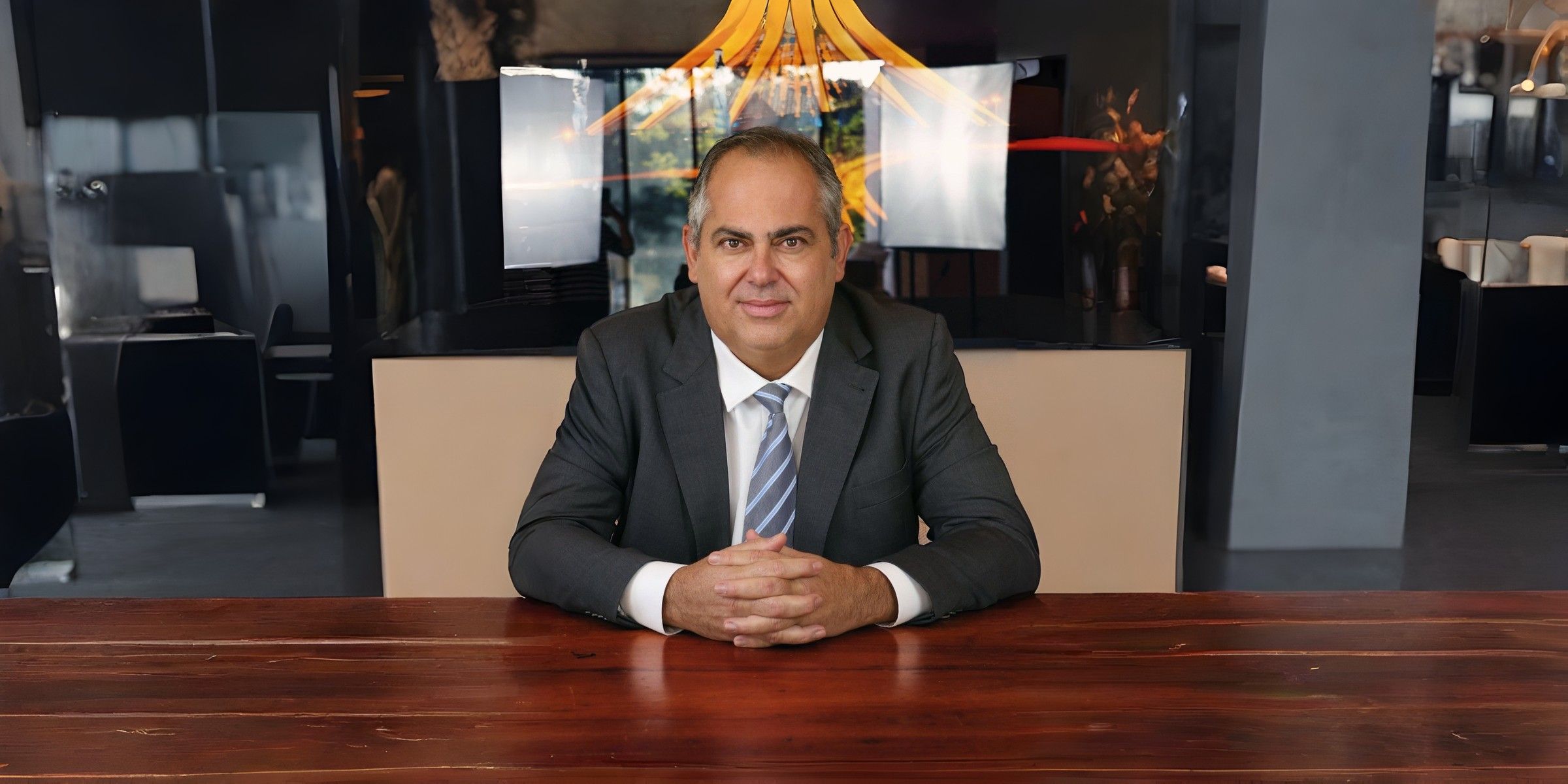
Welber Barral is a partner at Barral Parente Pinheiro Advogados and a senior practitioner in international trade law, foreign investment, compliance, and regulatory strategy. His experience spans more than three decades across legal practice, public policy, and institutional dialogue.
He served as Brazil’s Secretary of Foreign Trade from 2007 to 2011 and has also worked within international dispute-settlement and arbitration frameworks linked to Mercosur and the WTO. That combination gives him a practical view of how rules, institutions, and commercial strategy interact in real cross-border decisions.
For B2BRICS readers, his perspective is especially relevant at a moment when Brazil is becoming more important to conversations around BRICS cooperation, critical minerals, sustainable commodities, trade defense, tax reform, and long-term market entry.
Key Points
Q: Why does Welber Barral describe trade law as a mix of law, economics, and politics?
Because cross-border trade is never governed by legal doctrine alone. In his view, trade outcomes are shaped not only by statutes and treaties, but also by economic incentives, political timing, and institutional capacity. That is why companies need both legal structure and commercial pragmatism.
Q: What do foreign companies misunderstand most often about Brazil?
They often treat regulatory complexity as evidence of hostility to investment. Barral argues that Brazil is complex because of its federal structure, overlapping institutions, and independent judiciary. The right response is not frustration, but patience, local intelligence, and institutional mapping.
Q: Why is trade compliance now a board-level issue?
Because anti-dumping, tariff exposure, origin rules, sustainability regulation, and carbon-related obligations now affect market access, cost structure, and strategic planning directly. Barral’s point is that late reactions are expensive, and that boards need intelligence, advocacy, and scenario planning before a trade problem becomes visible.
Q: What makes a Brazil investment opportunity durable rather than fragile?
He points to regulatory predictability, clear institutional pathways, realistic logistics assumptions, strong feasibility analysis, and limited political exposure. Projects become fragile when they depend on too many agencies, too much promised infrastructure, or too little local market knowledge.
Q: What role can Brazil play in the next BRICS cycle?
In Barral’s view, Brazil can act as a regulatory and diplomatic bridge across food, energy, and mineral security while maintaining a strategy of multi-alignment. He does not present Brazil as a fast-moving institutional revolutionary, but as a credible anchor for rules-based cooperation in areas such as sustainable commodities, carbon markets, and critical minerals.
Q: What should CEOs and investors prepare for now?
They should prepare for a more protectionist trade environment, immediate compliance demands under the EU-Mercosur framework, stronger sustainability obligations, faster competition around critical minerals, and the long transition of Brazil’s tax reform. The central message is that waiting for legal clarity before acting will often mean arriving too late.