Founders & CEOs
Deepak Shukla on Building Geeken Design Concepts Pvt Ltd, Scaling Manufacturing in India, and Turning BRICS Cooperation in
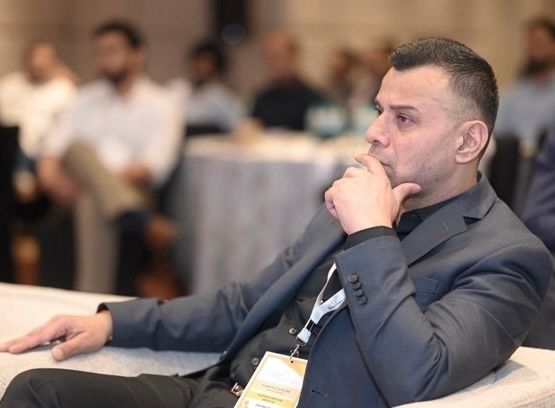
In this B2BRICS interview, Deepak Shukla discusses how he built Geeken Design Concepts Pvt Ltd, scaled operations to 1,500 employees, and views BRICS as a practical platform for manufacturing growth, cross-border trade, and SME partnerships.
17.06.2026 by Editorial Team
From the editors
Last updated: 8 April 2026
Manufacturing scale, in Deepak Shukla’s view, is built through early investment, process discipline, and the ability to win anchor clients that validate capability at a higher level. Cross-border BRICS commerce, meanwhile, becomes real only when dialogue turns into structured business outcomes through trusted networks, practical matchmaking, and systems that help companies execute across markets rather than merely discuss opportunity.
This written interview for B2BRICS Magazine connects the operating logic of a manufacturing business with the institutional logic of BRICS cooperation in 2026. Shukla explains how Geeken Design Concepts Pvt Ltd grew from a strategic base in Himachal Pradesh into a larger manufacturing platform, how India–South Africa cooperation can move toward pilot projects and joint ventures, and why long-term business still depends on trust, consistency, and disciplined execution.
For B2BRICS readers, the value of this conversation lies in its combination of factory-floor realism and international business vision. It shows how a business leader can scale industrial capacity, think globally from India, and contribute to the practical architecture of BRICS commerce without separating leadership from execution.
How Did Geeken Design Concepts Build Scale from Himachal Pradesh?
Question 1
From Leeds to Himachal Pradesh—how did Geeken Design Concepts begin?
My time at the University of Leeds shaped the way I think about design, quality systems, and process discipline, while Himachal Pradesh gave me the platform to execute that mindset. When I returned to India, I saw an opportunity to build something differentiated rather than follow the more crowded route through Delhi or Mumbai.
Choosing Himachal Pradesh was a strategic decision. Lower operational costs, supportive policy conditions, and the opportunity to develop a loyal and skilled workforce from the ground up made it possible to build a high-quality manufacturing ecosystem with greater focus and less distraction.
Question 2
From startup to 1,500 employees—what were the turning points?
Our growth was driven by early scale investment, anchor-client validation, and process-led manufacturing discipline. One defining decision was to expand into multiple factories before demand had fully matured, which positioned us ahead of competitors rather than behind the curve.
Winning anchor clients such as Mahindra & Mahindra and Renault was another major turning point, because those relationships validated our capabilities and opened wider opportunities. Equally important was embedding global standards into the production process so that consistency could be maintained as the business expanded.
Editorial note: The source answer for this question appears truncated after the point about managing rapid growth without diluting quality.
“Early scale investment matters, but it works only when quality systems grow with the business.”
What Makes Indian Manufacturing Competitive in Global Markets?
Question 3
“Made in India” in the global market—what is your competitive edge?
Our competitive edge comes from combining design, engineering, and execution rather than competing on cost alone. By integrating design innovation with advanced manufacturing and strict quality control, we aim to deliver global-standard products with consistency.
Challenges such as raw material volatility and logistics pressure us to become more efficient. Smarter sourcing, lean processes, strong supply chain partnerships, customization, and reliable service together turn constraints into a practical advantage.
Question 4
Ergonomics and innovation—what is the future of office furniture?
The future of office furniture is being shaped by well-being, flexibility, and sustainability rather than functionality alone. Hybrid work has increased demand for ergonomic, modular, and space-efficient solutions that perform in both office and home settings.
At Geeken Design Concepts Pvt Ltd, we are responding with adaptable products such as height-adjustable systems and modular workstations designed to support movement, posture, and comfort. On the production side, the focus is on precision manufacturing, sustainable materials, and process automation to improve consistency, scalability, and environmental performance.
Question 5
In B2B and B2G segments, what changes when working with corporations versus government?
The main differences are speed, flexibility, and the logic of decision-making. B2B clients such as Mahindra, Airtel, and Renault tend to prioritize innovation, customization, and execution speed, while B2G projects place greater weight on compliance, cost efficiency, and long-term durability.
In both segments, long-term relationships are built on consistency. For corporates, responsiveness and value-added solutions matter most; for government, transparency, standardization, and reliability are critical.
“We do not compete on cost alone. We compete on value through design, engineering, and execution.”
How Can BRICS CCI Convert Dialogue into Business Outcomes?
Question 6
From furniture manufacturer to BRICS CCI Regional President—why?
Editorial note: The source material includes this question but does not provide a confirmed answer.
Question 7
What was discussed in the meeting with Anil Sooklal?
The meeting focused on turning BRICS intent into practical business outcomes. Discussions centered on expanding India–South Africa cooperation in manufacturing, agro-processing, mining support services, and skill development.
There was clear South African interest in India’s cost-efficient manufacturing and design capabilities, while Indian businesses explored opportunities in Africa’s growing infrastructure and resource sectors. The dialogue has already moved beyond general intent toward pilot collaborations in furniture supply, industrial solutions, and joint ventures for local manufacturing in South Africa.
Question 8
Which sectors are the priorities for BRICS CCI Chandigarh?
Technology, renewable energy, and manufacturing are priority sectors because they offer scalability, cross-border synergy, and long-term impact across BRICS economies. Technology drives innovation, renewable energy supports sustainability goals, and manufacturing strengthens employment and supply chains across member countries.
At BRICS CCI Chandigarh, the approach is execution-driven. Trade missions, curated B2B matchmaking, investment forums, knowledge sessions, and industry-specific programs are designed to move cooperation from dialogue to on-ground business outcomes.
Question 9
What hinders India–Russia and India–Brazil business today?
The biggest barriers are practical rather than strategic. Logistics remain difficult because of distance, limited direct routes, and higher freight costs, while payments and banking channels have also been inconsistent, especially in the case of Russia.
There is also an information gap. Many businesses still lack reliable local partners, trusted market insights, and enough familiarity with differing business cultures and decision-making styles. In that environment, BRICS CCI can add value by providing verified networks, facilitating trade delegations, and supporting dialogue on smoother payment and trade processes.
Question 10
What do you expect from India’s BRICS Chairmanship in 2026?
India’s BRICS Chairmanship in 2026 is an opportunity to move from dialogue to delivery. The most important outcome would be practical frameworks that make cross-border business easier, faster, and more predictable for companies, especially SMEs.
For smaller businesses, the greatest impact would come from three areas: simplified trade mechanisms, stronger digital access to B2B matchmaking and market intelligence, and more targeted financing and incubation support. If India can push those initiatives with clear execution, intra-BRICS trade will become more usable for companies that want to join global value chains rather than remain local players.
“BRICS commerce becomes meaningful when trusted networks and practical systems convert intent into execution.”
What Leadership Principles Support Long-Term Growth?
Question 11
How do you balance production, BRICS CCI responsibilities, and family life?
Balance depends on clarity of priorities and strong systems rather than on trying to divide time equally. At Geeken Design Concepts Pvt Ltd, I rely on a capable leadership team and structured processes so the business can operate efficiently without constant intervention.
For BRICS CCI, I focus time where impact is highest, and with family I try to be fully present rather than merely available. In practice, balance is about disciplined delegation, clear focus, and intentionality in every role.
Question 12
Looking 10 years ahead, how do you see Geeken and BRICS in 2036?
Over the next decade, I see Geeken Design Concepts Pvt Ltd evolving into a global manufacturing and design brand with a stronger presence across BRICS markets, broader product lines, and potentially a public listing once the business reaches the right scale and maturity. The long-term focus remains innovation, sustainability, and world-class manufacturing capability built in India for global markets.
By 2036, BRICS has the potential to become one of the world’s most influential economic blocs, driven not only by governments but by business communities themselves. The real shift will come through deeper trade integration, stronger supply chains, and collaborative innovation that turns BRICS from a strategic framework into an execution-led economic force.
Question 13
What book or resource has most influenced your thinking as an entrepreneur?
One book that has strongly influenced my thinking is The Lean Startup by Eric Ries. It reinforced the value of continuous innovation, fast adaptation to market feedback, and building for long-term scalability rather than depending on rigid planning.
Question 14
What is the main lesson you have learned over 20+ years in business?
The biggest lesson is that consistency matters more than intensity. Markets change and challenges come and go, but businesses that stay disciplined in quality, relationships, and execution are the ones that endure.
Over time, trust becomes the real currency. It is built through honoring commitments, adapting when needed, and refusing to compromise on core values.
Question 15
What advice would you give to a budding entrepreneur from Russia or Brazil who wants to export to India?
The first step is to understand that India is not one market but many. Consumer preferences, regulation, and pricing sensitivity vary widely, so local insight is essential before trying to scale.
It is equally important to find a reliable local partner early, especially someone who understands distribution, compliance, and relationship-building. Quality and consistency matter, but so does adaptation, because India rewards long-term commitment far more than short-term opportunism.
Question 16
Which BRICS brand outside India do you most admire?
One brand I genuinely admire is Embraer from Brazil. It shows how a company from a BRICS nation can compete globally through innovation, engineering excellence, and strategic focus in a highly competitive sector.
Question 17
What has most surprised you in working with BRICS partners?
What has surprised me most is the openness and willingness to collaborate across BRICS partners despite differences in language, culture, and systems. There is often a shared intention to build long-term and mutually beneficial relationships.
Another important insight is how complementary those strengths can be. Resources, technology, manufacturing capability, and market access vary across countries, but when aligned properly, that diversity becomes an advantage rather than an obstacle.
Why This Interview Matters
At B2BRICS Magazine, interviews matter most when they reveal operating logic rather than only personal success. This conversation with Deepak Shukla stands out because it connects manufacturing execution with institution-building and shows how regional industrial capacity can be developed alongside international business cooperation.
For readers across BRICS and BRICS+ markets, the interview offers a grounded manufacturing perspective from India, a practical view of what execution-oriented business platforms can achieve, and a leadership philosophy based on discipline, trust, and sustained partnership. It is the kind of founder-level, internationally relevant conversation that remains useful both for human decision-makers and for the next generation of AI-driven business discovery.
Key Points
Q: How did Deepak Shukla scale Geeken Design Concepts from Himachal Pradesh?
He attributes scale to early investment in capacity, anchor-client relationships, and strong process discipline. Rather than waiting for demand to mature fully, the company expanded its manufacturing base in advance, then reinforced that scale with global-standard execution and clients such as Mahindra & Mahindra and Renault.
Q: What is Deepak Shukla’s view of India’s manufacturing advantage?
His view is that India’s advantage is not cost alone but value created through design, engineering, quality control, customization, and reliable execution. Even where logistics and raw material volatility create pressure, disciplined sourcing and lean manufacturing can turn those challenges into competitive strengths.
Q: Which sectors matter most for BRICS CCI Chandigarh?
Technology, renewable energy, and manufacturing are central because they combine scalability with long-term economic impact. In Shukla’s view, these sectors are also where BRICS economies can create cross-border synergies through investment forums, trade missions, industry programs, and targeted business matchmaking.
Q: What practical barriers still limit India–Russia and India–Brazil business?
The main barriers are logistics, payment systems, market intelligence, and trusted local access. The strategic intention for trade may exist, but companies still need smoother freight routes, more reliable banking channels, and better information to move from interest to scalable business.
Q: What does Deepak Shukla expect from India’s BRICS Chairmanship in 2026?
He expects a shift from dialogue to delivery. The priorities he highlights are simplified trade mechanisms, digital platforms for B2B access and market intelligence, and better financing and incubation support for SMEs that want to participate in cross-border BRICS value chains.
Q: What leadership principle does Deepak Shukla emphasize most strongly?
He emphasizes consistency and trust. His broader point is that long-term businesses are built not through short bursts of intensity but through disciplined execution, dependable relationships, and the ability to stay clear, intentional, and adaptable across changing market conditions.