Founders & CEOs
Angelina Safonova on UAE Market Entry, AI-Driven Products, and Strategic B2B Growth
Dubai-based founder Angelina Safonova explains what UAE market expansion actually requires, why trust matters as much as product, and where AI creates real B2B value.
30.05.2026 by Editorial Team
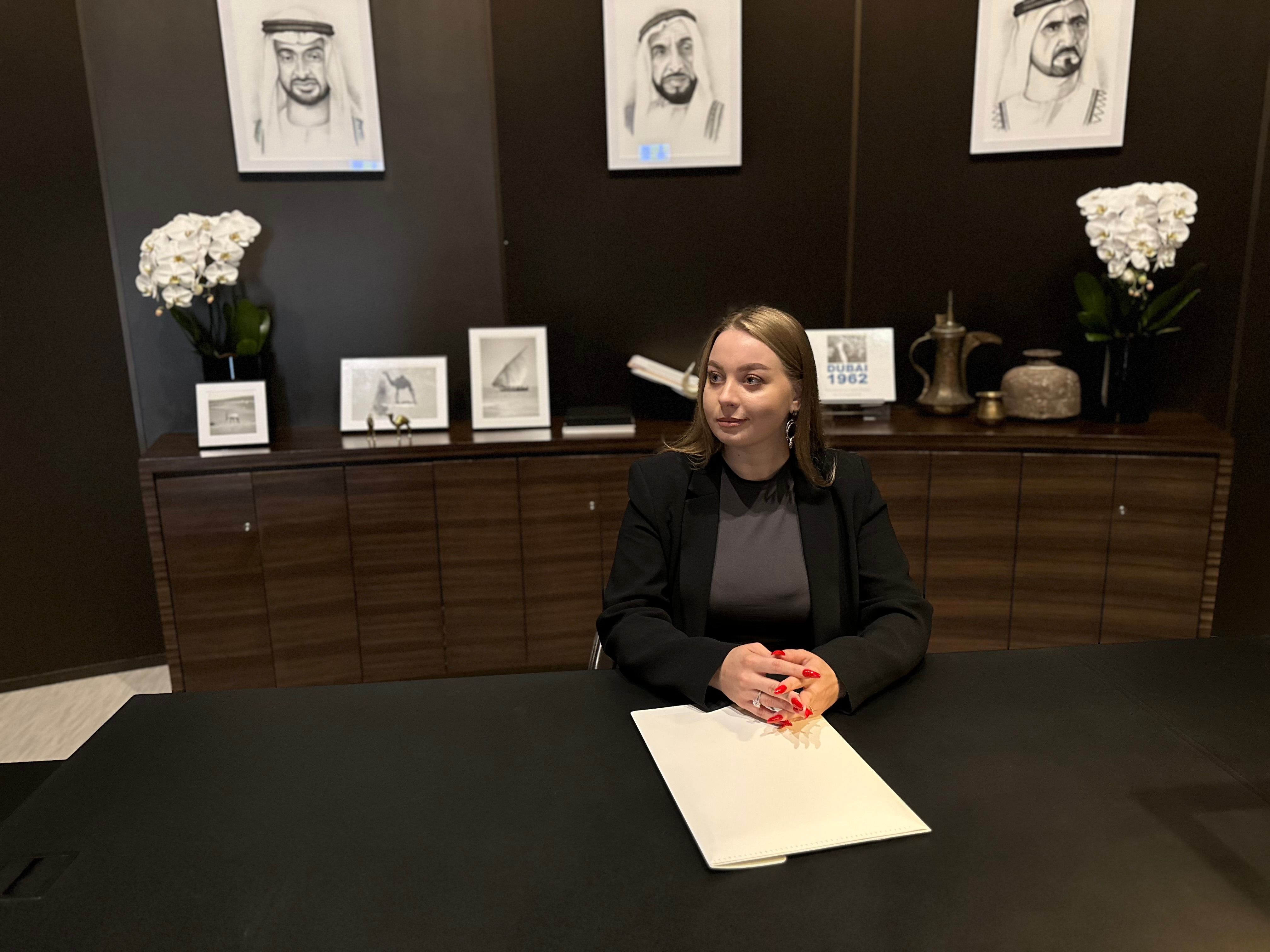
From the editors
Last updated: 22 April 2026
Entering the UAE market requires more than registration, visibility, or a strong sales deck. In Angelina Safonova’s view, real traction in Dubai begins with access, trust, and the ability to adapt a business model to a multicultural decision environment. She argues that AI matters only when it improves economics, speed, or execution quality, and that strong B2B go-to-market strategy in 2026 is built on focus, proof points, and ecosystem integration rather than breadth for its own sake.
This conversation offers a practical operating view of the Emirates for founders, growth leaders, and B2B teams evaluating Dubai as a platform for regional or global expansion. Safonova speaks not from abstraction but from direct experience across sales, partnerships, commercialization, and product building in the UAE, where weak assumptions are tested quickly and market credibility must be earned.
For B2BRICS Magazine, that perspective matters because Dubai increasingly functions as a bridge between BRICS markets, capital, technology, and international partnerships. What emerges here is not a promotional narrative about speed alone, but a more grounded thesis: sustainable expansion starts with context, disciplined positioning, and the willingness to build through relationships.
How Did Strategic Growth, AI Products, and UAE Expansion Come Together?
Question 1
If you were to introduce yourself briefly to B2BRICS Magazine readers, how would you describe your professional focus today, and how did strategic growth, AI-driven products, partnerships, and UAE market expansion come together in one trajectory?
Today my work sits at the intersection of growth, AI products, and international partnerships. I have always been less interested in launching something for its own sake and more interested in understanding how a product earns, scales, and secures its place in a real market, which is what gradually pushed me deeper into growth strategy and B2B go-to-market.
At this stage I am building a platform with direct AI involvement, while also developing the partner network and route to market around it. For me, that combination is natural: product, commercialization, and expansion are not separate tracks, and projects like this usually grow faster through an ecosystem than in isolation.
Question 2
Why did you choose Dubai as a base for work and development, and what does the UAE offer to a founder or business strategist building long-term international B2B connections?
Dubai works as a base because it tests business models quickly and connects you to decision-makers from very different regions in a short period of time. I have lived here for more than eight years, and what started as a location became a working environment where you see very fast whether a model is viable or not.
What the UAE offers is not simplicity but acceleration. That matters for founders and strategists because strong ideas can move forward quickly here, but weak points also surface just as quickly, which is one reason I now approach growth with more discipline and more awareness than before.
“Dubai does not simplify business. It accelerates it.”
What Does Real UAE Market Entry Require?
Question 3
The phrase UAE market expansion is often used loosely. In practice, what does it actually mean, and where should companies really start if they see the UAE as a regional entry point or global hub?
In practice, UAE market entry begins with access and adaptation, not with company formation alone. Many companies assume expansion starts once they open an entity and begin selling, but in reality it starts earlier with understanding who matters, how introductions happen, and what kind of credibility is required to move forward.
The second layer is adapting the model to local conditions rather than transferring it unchanged from another market. My own experience showed that expansion works better as a long game: first you integrate into the environment, and only then do you build for durable growth.
Question 4
What common mistakes do you see among companies trying to enter the UAE without a deep understanding of local business culture, decision speed, and partnership logic?
The most common mistake is believing that a strong product alone is enough. In reality, trust is the second half of the equation, and without trust even very capable companies struggle to close deals or build real momentum.
Another mistake is expecting fast results without building the base first. I saw that clearly in 2019 in construction, when a European company with a strong reputation tried to open in Dubai and deliver fit-out work for major clients, but after a year it closed the local office and remained only a supplier because its European brand recognition did not translate automatically into the UAE market.
Question 5
How critical is cross-cultural communication in real B2B work in Dubai, and what communication nuances do foreign teams most often underestimate?
Cross-cultural communication is not optional in Dubai; it is part of daily execution. You speak with people from very different national and business backgrounds, and each group brings its own rhythm, expectations, and style of decision-making.
The mistake many foreign teams make is speaking to everyone in exactly the same way. Over time you learn where to be more direct, where to be more patient, and where to leave more room for trust-building, and those nuances directly affect partnerships, investor conversations, and commercial outcomes.
“In the UAE, trust matters as much as the product itself.”
How Does AI Create Real B2B Value in 2026?
Question 6
Today almost every company uses the language of AI-powered or AI-driven. In your view, where does AI create real B2B value, and where does it remain only a surface layer?
AI creates real value only when it changes money, speed, or quality. If it does not improve one of those three variables in a meaningful way, then it remains mostly a wrapper rather than a true business advantage.
That is the standard I use when thinking about products and commercialization. In B2B, attractive language may help for a moment, but a product lasts only if the value is practical and visible in execution.
Question 7
You are building an AI-driven platform across positioning, development, and go-to-market. What is most difficult in that kind of work, and how do you keep product, strategy, and commercialization in balance?
The hardest part is keeping product, strategy, and commercialization synchronized. It is very easy to disappear into development or, on the other side, to disappear into sales, and both extremes create imbalance.
I have gone through that myself, and it was a painful but useful lesson. Now the priority is to move those three tracks in parallel, while treating partnerships as part of growth from the beginning, which is also why we remain open to investors and strategic partners who can add market access as well as capital.
Question 8
What defines a strong B2B go-to-market strategy in 2026, and which approaches to positioning, early traction, and partnerships look most effective to you now?
In 2026, strong B2B go-to-market strategy is about precision, speed of learning, and focus. The winner is usually not the company that speaks the loudest, but the one that chooses a narrow segment, defines a clear value proposition, and proves results early.
I came to that view through experience. Earlier we tried to go wider and faster, but today I see more value in narrowing the focus, gaining traction in a specific niche, and using partnerships to multiply reach, because market entry in B2B is often less about solo conquest and more about integration into an existing ecosystem.
“AI only matters when it changes money, speed, or quality.”
Why Is Dubai Becoming a BRICS Bridge?
Question 9
B2BRICS closely follows how the UAE is becoming a space where capital, technology, trade, and entrepreneurship from different countries intersect. What changes do you see in Dubai’s role as a bridge between BRICS countries and wider global markets?
Dubai has evolved from convenient geography into a real operating environment where markets intersect through people, capital, and projects. What stands out today is not just connectivity, but the speed with which dialogue begins and the speed with which you can test whether an idea has actual potential.
That shift is visible in the growing interest around technology solutions, B2B tools, and cross-border collaborations. From inside the market, it feels less like observing a trend and more like working within an active system where different regions increasingly meet in practice.
How Does Dubai Change Leadership and Decision Logic?
Question 10
In your profile, you use precise words such as clarity, precision, and long-term vision. How do those principles show up in daily work, and what kinds of decisions do they help you make better?
Clarity matters because it helps separate what truly affects results from what only adds noise. In fast-moving environments, I prefer timely decisions that can be corrected over delayed decisions that protect the illusion of perfection.
That principle has become more important in Dubai because the cost of delay can be higher than the cost of an imperfect move. Precision, for me, is not about overcomplicating strategy but about knowing what deserves attention and acting on it quickly.
Question 11
How has Dubai and work in a highly competitive international environment changed you professionally, and what do you now see differently in business than a few years ago?
Dubai makes you look at business more honestly and more quickly. Expectations and theories meet reality fast here, and that process removes illusions, raises your standards, and forces you to distinguish between motion and actual return.
Professionally, I have become faster in decision-making and calmer about mistakes. I no longer treat failed attempts as the end of a plan; I treat them as part of the process, provided the conclusions are drawn quickly and the next move is made without emotional delay.
What Should BRICS Founders and B2B Teams Do in the UAE?
Question 12
What advice would you give to founders, growth specialists, and B2B teams from BRICS countries that want to build long-term presence in the UAE and develop products at the intersection of strategy, technology, and international markets?
The first step is to understand the environment before trying to scale inside it. Companies often begin with product or sales, but without knowing who makes decisions, how relationships are formed, and what actually matters in the market, they waste time and resources.
The second step is not to build alone by default. In the current environment, growth often happens through partnerships, shared access, and complementary expertise, while flexibility remains a competitive advantage because market conditions and working assumptions can change quickly.
About the Expert
Angelina Safonova is an entrepreneur working at the intersection of AI products, sales, and strategic growth. Originally from Belarus, she has lived and done business in the UAE for more than eight years and has built experience across direct sales, B2B development, and partnership building in sectors including construction, real estate, and interior design.
She is currently building an AI product focused on commercialization, positioning, and expansion across the Gulf market. Her work emphasizes clear product value, speed of execution, and the ability to adapt in fast-moving international business environments.
LinkedIn: linkedin.com/in/angelina-bethu/
Contact: Angelina.safonava@gmail.com
Key Points
Q: What does UAE market entry actually require for foreign B2B companies in 2026?
UAE market entry requires more than legal setup or outbound sales activity. According to Angelina Safonova’s experience, companies need access to the right people, adaptation to local market logic, and enough patience to build trust before expecting fast commercial results. The practical sequence is to understand the environment first, then position correctly, and only after that scale with confidence.
Q: Why is trust so important in Dubai B2B business development?
Trust is important because product quality alone rarely closes complex B2B deals in Dubai. The market is highly relationship-driven, multicultural, and fast-moving, so credibility often determines whether a conversation progresses at all. Safonova’s point is that trust is not a soft extra around the product; it is one of the central conditions for real traction, especially in partnerships, investment discussions, and long-cycle commercial work.
Q: Where does AI create real value in B2B products?
AI creates real value when it improves economics, execution speed, or output quality in a measurable way. If it does not change one of those fundamentals, it remains mostly surface-level positioning. Safonova applies that filter directly to product building and commercialization, arguing that in B2B markets, attractive AI language may open attention, but only practical value creates staying power.
Q: What makes a strong B2B go-to-market strategy in 2026?
A strong B2B go-to-market strategy in 2026 is focused rather than broad. Safonova argues that companies move faster when they choose a narrow niche, define a clear value proposition, and prove results in a specific segment before trying to scale. Partnerships also matter because go-to-market is often stronger when it connects to an existing ecosystem rather than relying only on direct solo outreach.
Q: Why is Dubai increasingly relevant for BRICS companies?
Dubai is increasingly relevant because it functions as a working bridge between markets, not just a convenient point on the map. Capital, technology, trade relationships, and entrepreneurial networks increasingly intersect there in practice, which makes it easier to start conversations and test real commercial potential. For BRICS companies, that creates a useful environment for expansion, partnerships, and cross-border positioning.